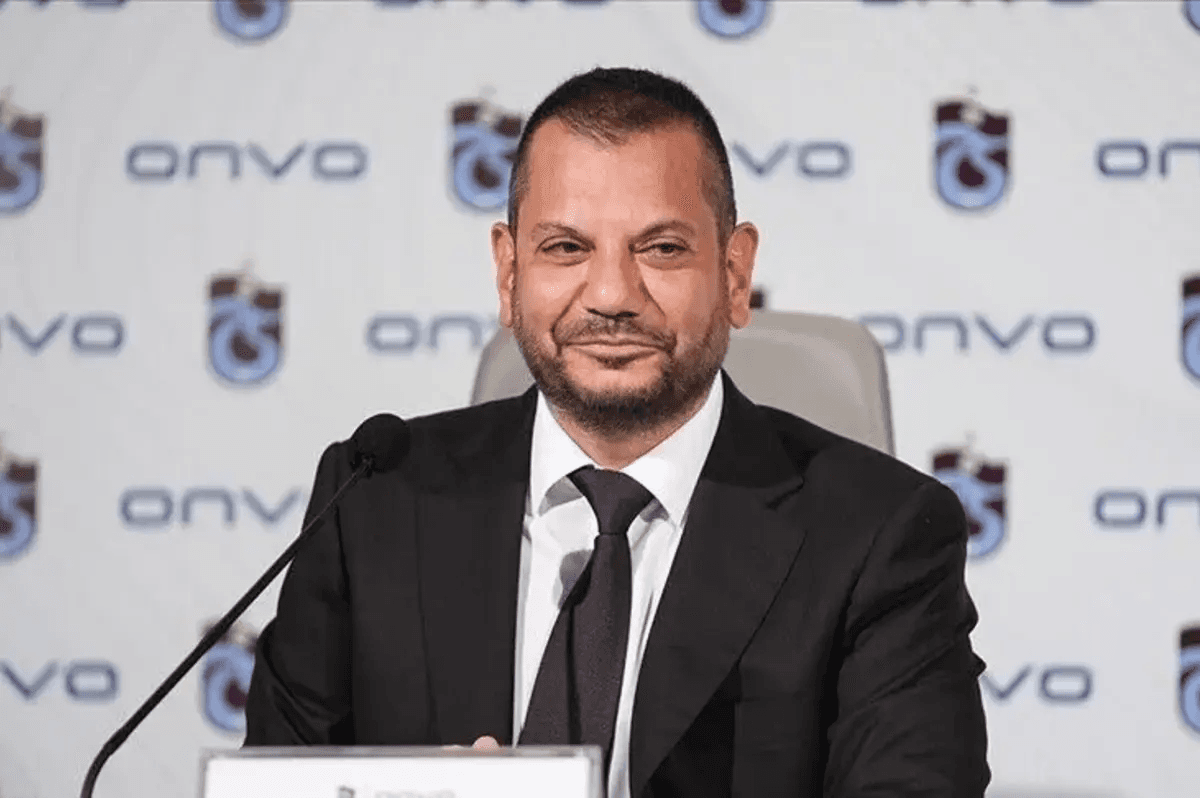
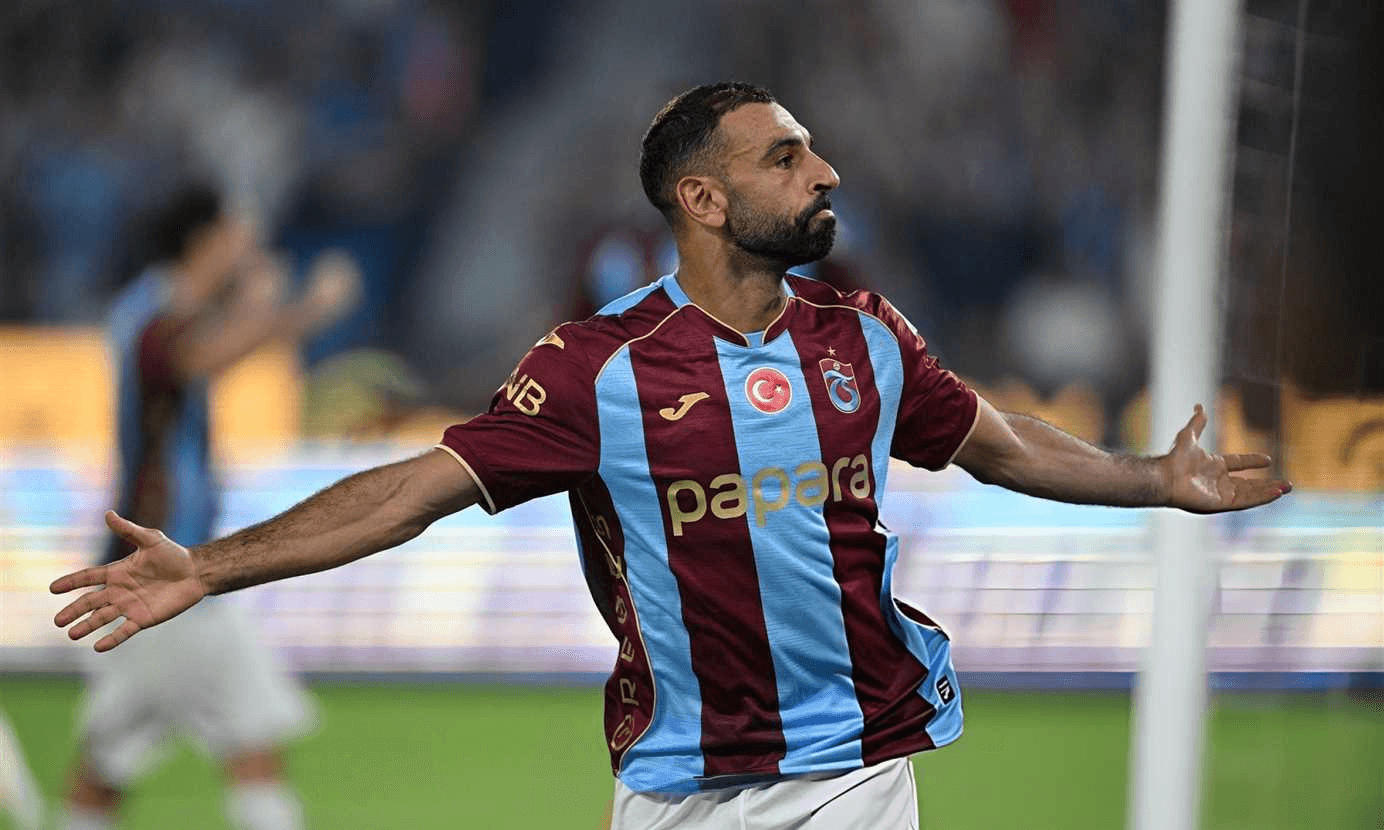
Three days before Trabzonspor announced the signing of Mohamed Salah, his four British companies underwent a simultaneous change in management
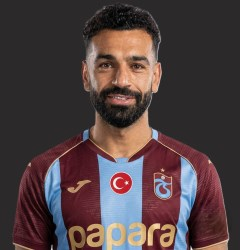
Mohamed Salah
Club: Trabzonspor
On August 3, 2026, Salah ended his tenure as a director of the four companies, and his wife, Magdy Mohamed Sadek, was appointed as a director of the four companies on the same day.
In three of the companies, chartered accountant and tax advisor Frederick William Huxtable joined Magdy in management, while he had already held the position of director in the main commercial company since May 2024. Three days later, on August 6, Trabzonspor announced the signing of a two-year contract with Salah.
The proximity of the dates reveals a significant restructuring in the management of Salah’s assets and companies.
The coincidence alone does not prove the reason for the change, but it places tax considerations among the possible explanations, alongside shifts occurring in this context in both the UK and Abu Dhabi.
His wife moves to the forefront of management
Magdy Sadek remained largely out of the spotlight throughout the years of her husband’s fame in Europe, but company records show that she had not entered the family business structure for the first time in August 2026.
In fact, Magdy was already an owner or partner in two of the family companies before Salah’s move to Turkey, while their daughter, Makkah, shares ownership of a third real estate company. Ownership percentages are detailed in the company map below.
However, what was new on August 3 was her transition to the seat of registered director in the four companies, coinciding with Salah’s exit from their boards of directors.
Four companies.. and assets exceeding £54 million
The latest financial statements of Salah’s four British companies reveal total accounting assets exceeding £54 million, while their combined net positions approach £34.8 million, despite differences in accounting closing dates and the presentation of items. These figures do not represent the market value of the companies or an estimate of Salah’s personal wealth.
Ownership and control are distributed within the family as follows: Salah owns all the shares in his main commercial company, SALAH UK COMMERCIAL, and shares ownership of MOS REAL ESTATE equally with his wife, Magdy. He also shares the shares of TRINITY KENSINGTON with his daughter, Makkah, at 50% each, while retaining the right to appoint or remove directors. Magdy owns all the shares of MOS INVESTORS and is registered as its controller.
What changed with Salah’s exit from management?
Under the new arrangements, Salah has become a player who moved to work in Turkey without remaining a registered director of his four British companies, which are now solely managed by his wife, Magdy, and the chartered accountant
and tax advisor, Frederick Huxtable. Huxtable was a former partner in the international accounting and tax advisory network RSM and has previously written about the tax treatment of image rights.
This arrangement may help separate Salah’s life and new work in Turkey from the management of his British assets, but it does not grant him an automatic tax exemption. His UK tax residency is determined by other factors, most notably the number of days he spends in the UK, his place of work and residence, and his family ties.
The British image rights company
SALAH UK COMMERCIAL LIMITED began its operations coinciding with Salah’s move to Chelsea and remains active.
The importance of the company is highlighted by a ruling from the Amsterdam court in a dispute with Adidas; it stated that Salah’s rights in the UK are owned and managed by SALAH UK COMMERCIAL, while IMAGECORP HOLDINGS LIMITED owns and manages his rights in the rest of the world.
Each company was linked to a separate sponsorship contract with Adidas, which ended on July 31, 2026. Thus, the British company allows for the licensing of the use of Salah’s name and image within the UK in exchange for payments made to it.
Its latest available accounts, filed in February 2026 for the year ending in June 2025, reveal total assets of approximately £46 million and liabilities of around
£10.5 million, resulting in net assets of £35.5 million, compared to approximately £29.3 million a year earlier; an increase of nearly £6.2 million.
Net assets do not represent Salah’s annual income or an amount he received in cash during the year; it is a cumulative figure of what the company owns after deducting its liabilities. The published accounts also do not break down annual sales or the value paid by Liverpool compared to sponsorship contracts.
HMRC clarifies that company profits are subject to corporation tax, and then the funds received by the shareholder are subject to other rules depending on whether they are withdrawn as salary or dividends. The accounts prove that the company accumulated net assets of tens of millions of pounds during his time in the English Premier League.
A British tax change awaits implementation
In November 2025, the British government announced its intention to introduce a tax change starting on April 6, 2027, targeting image rights payments when they are linked to a player’s contract with their club.
Under the current system, a player’s company can receive payments from their club for the exploitation of their image without them being treated as part of their salary, provided that the rights have commercial value and the club has a genuine plan to exploit them.
The Halesowen Town case drew the line; payments equivalent to approximately 25% of a player’s income were treated as wages after authorities concluded that the club did not have a genuine commercial plan to exploit his image rights.
Once the new rule is implemented, any image rights payment linked to the player’s employment will be treated as part of their wages, even if transferred to their company, making it subject to income tax and national insurance contributions.
The change does not automatically cover independent sponsorship contracts, such as those with Adidas or Pepsi.
Salah’s contract with Liverpool was set to last until 2027 before an agreement was reached to end it early. Had it continued to its conclusion, the new rule would have come into effect during his final weeks at
the club, and any image rights payments linked to his contract with Liverpool would have been subject to wage treatment, even if received by his British company.
About four months after the announcement of this tax amendment, specifically on March 24, 2026, Salah announced his departure at the end of the season. This timing makes the reform a potentially relevant factor in the decision, but it does not prove it was a cause; no document links the two matters.
ImageCorp: From the Caymans to Abu Dhabi
The second company is IMAGECORP HOLDINGS LIMITED, which the Dutch ruling describes as the owner and manager of Salah’s rights outside the UK. According to the public register of the Abu Dhabi Global Market, the company was established in the Cayman Islands on January 24, 2014, under number GC-284598.
In January 2021, it legally moved to the Abu Dhabi Global Market (ADGM), carrying entity number 000005015, and Rami Abbas Issa, Salah’s lawyer and advisor,
appeared as its director. On April 4, 2025, Salah’s appearance as a direct shareholder ended, and an entity named JUPITER INVESTMENTS LIMITED later appeared as the direct shareholder.
The change in the direct shareholder’s name does not reveal the ultimate economic owner; the public register does not show the beneficiary of Jupiter, and thus it cannot be determined whether it is a holding company within a structure benefiting Salah or an entity independent of him.
The company leaves Abu Dhabi.. and its destination is not shown
On April 29, 2026, about five weeks after the announcement of Salah’s departure from Liverpool, ImageCorp filed a request to move from the Abu Dhabi Global Market to another jurisdiction. The market authorities approved the process on June 17, and it was finally registered on June 22.
The phrase “continued outside the Abu Dhabi Global Market” means that ImageCorp was not dissolved, but rather transferred its legal domicile to another jurisdiction while retaining its legal personality. On the same day, Rami Abbas’s status as director ended, having appeared in Salah’s international rights structures since 2018, according to the Abu Dhabi register, as did Jupiter’s appearance as a direct
shareholder in it.
The available public register stops at this point; it does not reveal the new jurisdiction or the names of directors and shareholders after the transfer.
Did the new tax drive the departure?
When ImageCorp arrived in Abu Dhabi in 2021, the UAE was not applying a general federal corporate tax on profits under the current system. Corporate tax began for financial years starting on or after June 1, 2023, making the company required to register, file returns, and pay any tax due.
The company's presence in a free zone does not guarantee a zero rate; it is limited to "qualifying income," while non-qualifying income is subject to a 9% rate. According to the Federal Tax Authority's guide, trademarks and other marketing intellectual property do not fall under the category of intellectual property eligible for the zero rate.
Therefore, the tax represents a possible interpretation of the departure: ImageCorp submitted its application in April 2026, after the new system came into effect. However, the timing also coincided with other commercial and sporting changes concerning Salah.
On July 31, 2026, the two Adidas agreements referenced by the Dutch judge for both ImageCorp and SALAH UK COMMERCIAL expired. Three days later, Salah stepped down from the boards of his four British companies. Three days after that, he signed his contract with Trabzonspor.
The tax gives weight to the departure hypothesis, but it does not explain the decision alone; Salah was simultaneously ending a commercial and sporting phase and starting another, which may have necessitated a restructuring of his image rights, contracts, and companies.
€17 million annually and 20% of his name sales
The Trabzonspor contract adds a new piece to this map. According to the club's announcement to the Turkish public disclosure platform (KAP), Salah receives €10 million in salary and €7 million in signing fees each season of the two-year contract; that is, €17 million guaranteed annually, plus conditional bonuses of undisclosed amounts.
The disclosure also specifies a fee for agent services equal to 5% of the total salary paid to the player, which is a separate cost of the deal and not an additional amount for Salah. The club also revealed a separate contract granting the player 20% of sales of products bearing his name within the club's retail company, not 20% of all Trabzonspor sales or the full proceeds of his image rights in Turkey.
Trabzonspor's disclosure does not specify whether this share will be paid directly to Salah or through one of his companies. In either case, transferring funds to a company outside Turkey does not automatically exempt them from Turkish taxes; payments of Turkish origin may be subject to withholding or local tax treatment, depending on the nature of the rights, the company's location, and the applicable double taxation treaty.
If the payments enter Salah's British company, its profits will fall under the British corporate tax system, which has a main rate of 25%. Had ImageCorp remained in Abu Dhabi, the zero rate would not have been guaranteed, as name and image rights of a marketing nature may be subject to the 9% rate.
However, ImageCorp left Abu Dhabi less than two months before the Turkish contract was signed, so the question is no longer whether the funds will go to Britain or the UAE, but where the company that managed Salah's image rights outside Britain settled, and whether it will receive the 20% share of sales of products associated with his name in Turkey.
Salah entered his Turkish phase after a clear redistribution of roles: control of his main British company under his name remained, registered management transferred to his wife and a professional accountant, the company that managed his international rights left Abu Dhabi for a new jurisdiction, and the Trabzonspor contract created an independent source of commercial proceeds linked to his name. These steps alone do not prove a tax plan, but their convergence reveals a restructuring that preceded his sporting and commercial move from Britain to Turkey.