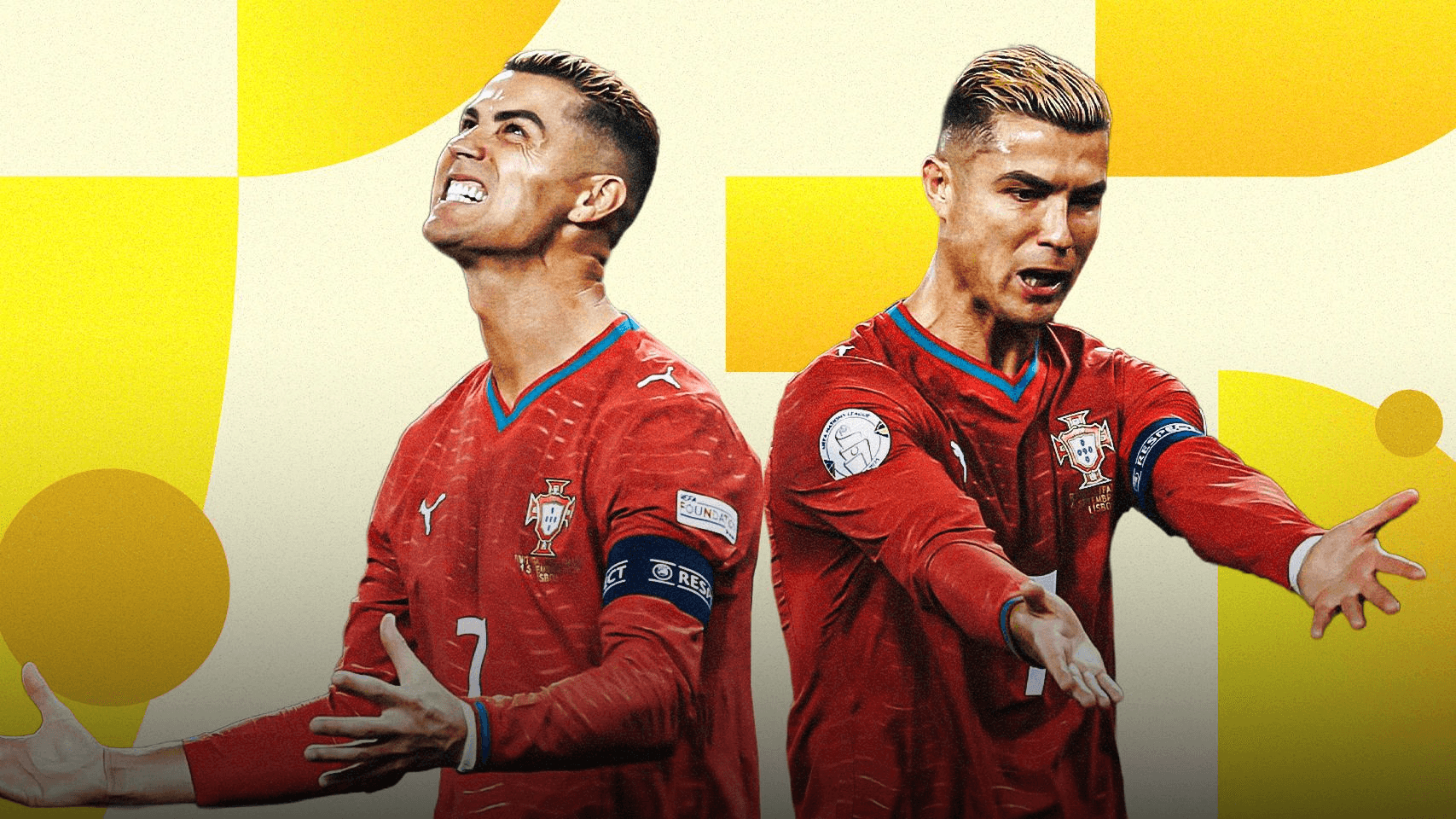
These appear to be Cristiano Ronaldo's final days with the Portuguese national team, as all signs point to an approaching end amidst a crisis, leaving "The Don" to exit through a narrow door after a legendary career with the "Brazil of Europe."
Why didn't the 41-year-old learn from the stories of legends who chose the right timing to end their careers? Why didn't he realize that endings are sometimes more beautiful when they come before reality forces them upon you?
Ronaldo is currently experiencing a crisis with his coach and fellow countryman, Jorge Jesus. This crisis seems strange, given that it involves a man many believed would be Ronaldo's primary advocate during his final days with the national team.
Since Jesus was appointed, fans said that Ronaldo had finally found a coach who knows him well, understands how to deal with him, and even grants him what he wants in the final stage of his international career.
But suddenly, the situation reversed.
It is as if Jesus is not the coach who came to Al-Nassr following a call from Ronaldo, nor the man who showered the 41-year-old with praise throughout last season, defending him even during his worst periods, only to find himself today on the opposite side of him.
I do not know if there are behind-the-scenes details we are still unaware of, especially since Ronaldo stated he would reveal the truth at the appropriate time. However, there is one truth "The Don" should have realized long ago: at age 41, no one has a guarantee of remaining the first choice forever.
Not even Cristiano Ronaldo.
Ronaldo's Pride
Ronaldo should have known that sitting on the bench, even for just one match, is not an insult to his history.
He could have been angry, discussed the matter, disagreed with the coach, or even asked for an explanation of what happened. But the star who spent two full decades imposing himself on the world needed, in his final days, something harder than scoring goals: to accept that time is no longer working in his favor.
And this is precisely where the problem lies.
Ronaldo set a poor example for a legendary star in his final days. The tension, leaving the camp, and abandoning the national team in the midst of a crisis—regardless of the real reasons—may write a final chapter that does not resemble the career he built himself.
Based on the picture emerging so far, what happened does not resemble the ending Ronaldo's fans wished for a legend of this magnitude.
However, at the same time, it was not entirely distant from how he handled the recent years of his international career, where he long pursued records, and now his goal is the 1,000th goal.
The irony is that the pride which created Ronaldo's legend may now be the very thing threatening its end. This pride made him refuse to surrender when everyone doubted him; he returned after injuries, changed his playing style, chased records, and defied time for years.
But at some point, it may transform from fuel pushing the legend forward into a constraint preventing it from knowing when to stop.
Messi Knew When to Say "Goodbye"
In contrast, look at Lionel Messi.
It is true that Messi previously announced his international retirement in 2016 after losing the Copa América final, then reversed his decision, but the true ending was completely different.
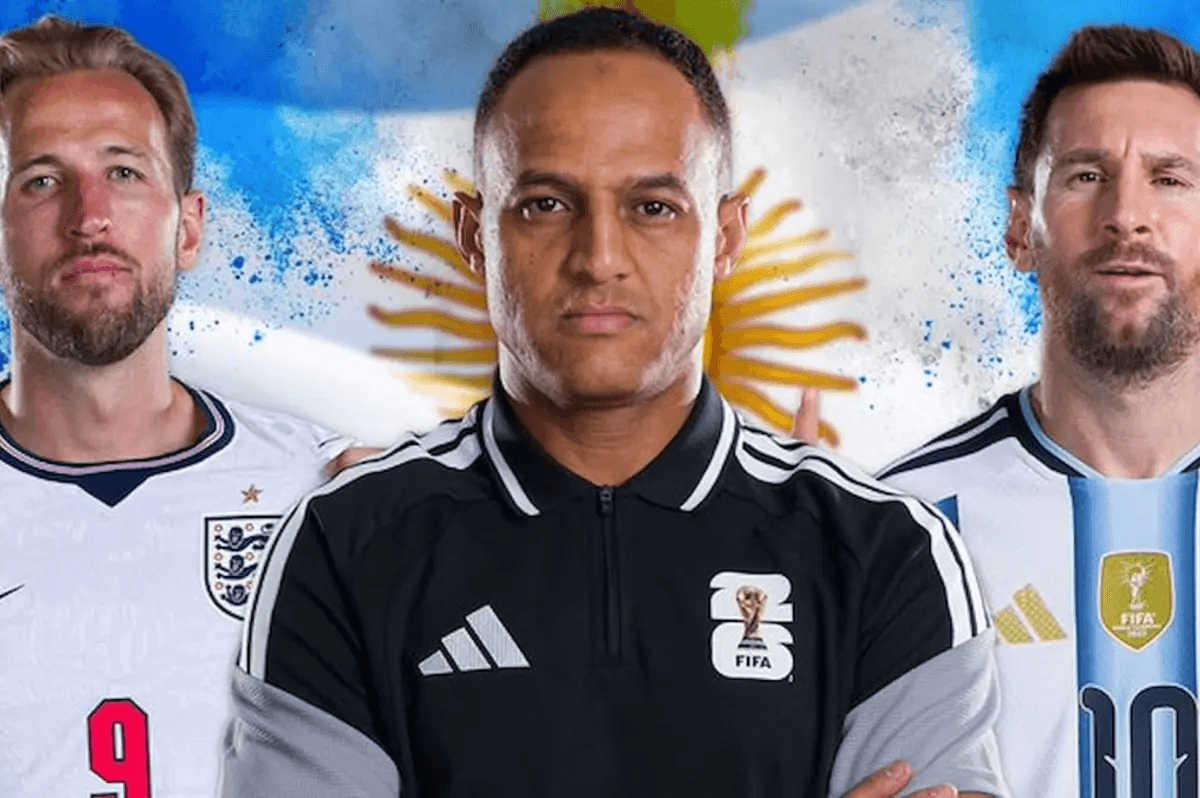
After years of pain and criticism, Messi led Argentina to win the 2022 World Cup, then added the Copa América title, and continued until the 2026 World Cup, before announcing his permanent international retirement at age 39, following the loss in the World Cup final against Spain.
He did not leave because he was no longer capable of playing. He did not leave because he was asked to go. And he did not wait for a coach to tell him that another player was better than him in a certain match.
He left because he felt the story had reached its final chapter. And here lies the difference.
Also ironically, Messi will play his farewell match next week against Benin at the Monumental, in a night that will turn into a celebration of the end of an international career whose timing he chose himself. Perhaps Ronaldo will feel his mistake while watching that match.
Zidane.. The Ending Whose Image Was Never Complete
Even Zinedine Zidane, whose ending was by no means perfect, knew there was a moment when he had to stop.
Zidane announced that the 2006 World Cup would be his final chapter with France, then delivered an exceptional tournament, leading his country to the final and scoring a historic goal via a Panenka penalty, before his story ended with a red card against Italy.
Yes, the ending was painful. Yes, the headbutt on Marco Materazzi marred the final image.
But Zidane did not wait to become a marginal player, did not wait for his staying with France to become a daily issue, and did not enter a battle to prove he still deserved his place.
He knew this was the last World Cup. He knew the time had come, so he exited through the big door at age 34, and French fans wished he had continued for a few more years, especially since he was physically capable of offering more at that time.
Pelé.. Chose Retirement Before Time Imposed It
As for Pelé, one of the greatest ever to touch football, he offers a lesson Ronaldo perhaps should have paused over for a long time.
Pelé did not wait to become an ordinary player for Brazil, nor did he allow the final years of his international career to become a battle over whether he still deserved his place.
After leading Brazil to their third World Cup title in history in 1970, in one of the greatest editions presented by the Brazilian national team, Pelé played his last international match in 1971, at the age of thirty.
He could have continued. He was still capable of making a difference. But Pelé chose to close the door himself, having reached a peak that is difficult for any player to surpass.
He did not wait to lose his place. He did not wait for a new coach to decide his role had diminished. And he did not wait for his participation with Brazil to become a daily question about whether time had begun to defeat him.
Pelé chose the moment himself.