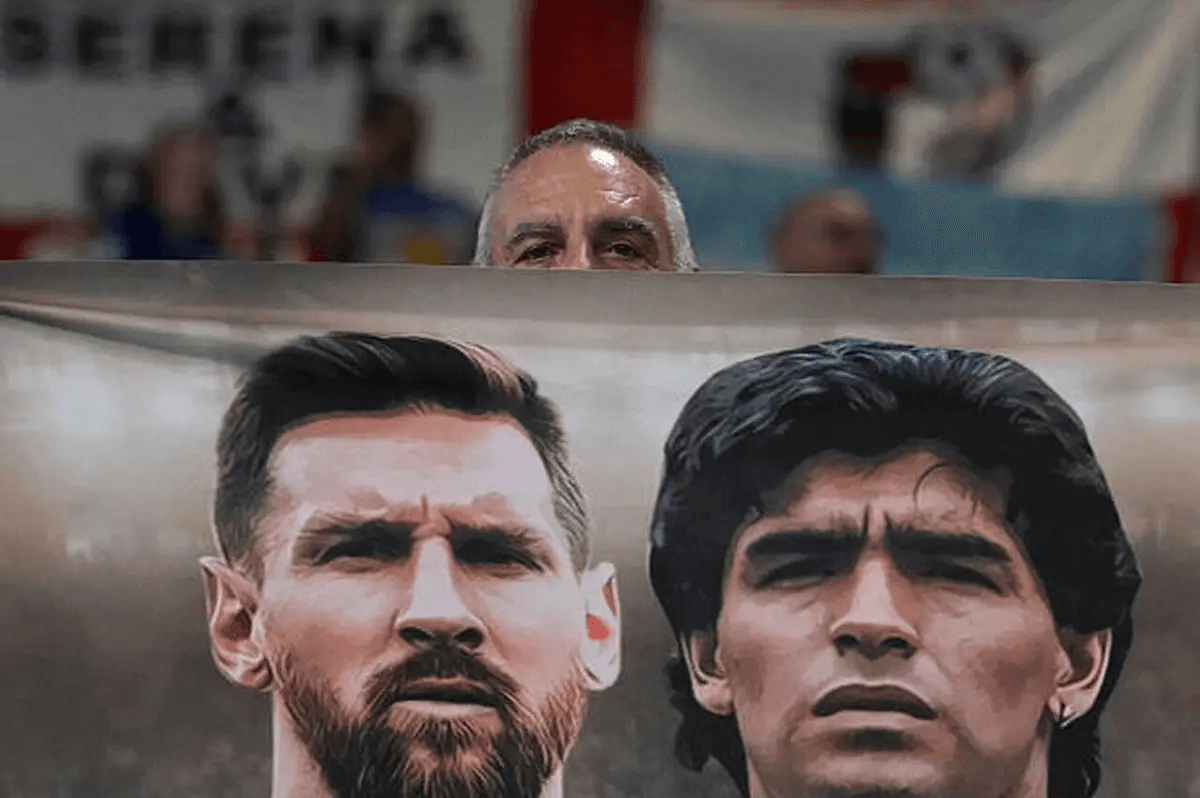

Argentine national team star Lionel Messi is preparing to play his final international match with the "Albiceleste" after announcing his retirement from international football days following the conclusion of the 2026 World Cup, which was won by Spain for the second time in their history.
Messi will play his last match for Argentina in a friendly against Benin on Wednesday morning at the "Monumental" stadium, home of River Plate in Buenos Aires.
With Messi's retirement, Argentina wants to retire the veteran star's number 10 shirt after the end of his international career. The idea is easy to understand; Messi wore this number during Argentina's victories in the Copa America in 2021 and 2024, as well as the 2022 World Cup, making the shirt one that carries immense history closely linked to Argentine football history.
Maradona preceded Messi
The Argentine Football Association had adopted the same idea with legend Diego Maradona. In October 2001, the association decided to retire the number 10 shirt in honor of the player who wore it in four World Cups and led Argentina to victory in Mexico in 1986. However, within a few months, the association discovered that retiring a shirt number domestically was one thing, but applying it in the World Cup was entirely another.
Argentina was preparing to participate in the 2002 World Cup in South Korea and Japan when they attempted to completely retire the number 10 shirt. Ariel Ortega had worn the number during the qualifiers, but he switched to number 23 for the tournament, while third-choice goalkeeper Roberto Bonano took number 24, allowing Argentina to submit a squad list containing numbers 1 through 9 and 11 through 24.
On May 22, reports from the Argentina camp stated that FIFA had approved this arrangement. Argentina had 23 players, but none were wearing the number 10 shirt, and Bonano was registered with number 24, making the unusual numbering system official at that moment.
However, there was another obstacle. While the World Cup organizing committee at FIFA approved the request, the decision had to be presented to the FIFA Executive Committee. Four days later, specifically on May 26, the Executive Committee met in Seoul, the Korean capital, and rejected the exception. Then-FIFA President Joseph Blatter announced that Argentina was required to return the number 10 shirt to the team list.
Blatter found a way to make the situation even stranger. Bonano had taken number 24 specifically so Argentina could avoid giving Maradona's number to another player, but Blatter joked that the goalkeeper could wear number 10 instead. He was referring to Maradona's famous "Hand of God" goal against England in the 1986 World Cup, implying that a goalkeeper wearing the same number would at least be able to use his hands.
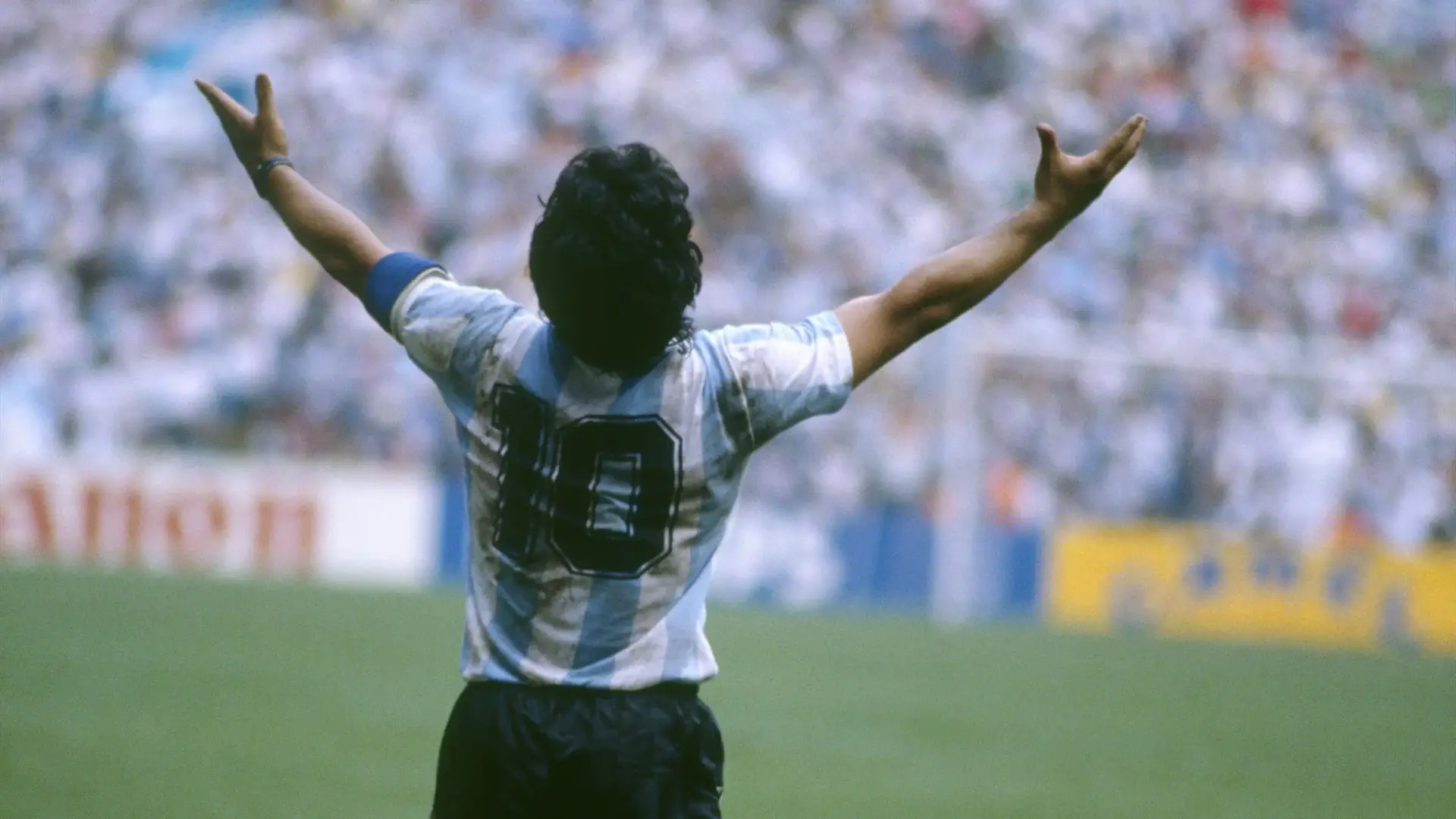
But Argentina did not resort to this option. Marcelo Bielsa returned the number 10 shirt to Ariel Ortega, while Bonano went back to number 23. Thus, the shirt left by Maradona was returned to an Argentine player before the World Cup even began.
This incident also prompted Blatter to discuss the possibility of changing the shirt numbering system in future tournaments. The then-FIFA president suggested that the federation might allow wider ranges of numbers in the future, citing systems such as 1 to 25, 1 to 30, or even 1 to 100. There was no reason to implement this change immediately before the 2002 tournament, so Argentina was forced to adhere to the existing rules.
Since then, these rules have changed with the increase in the size of national team squads in the World Cup, but they still leave very little room for retiring a shirt number. The regulations for the 2026 World Cup allow for a final squad of 23 to 26 players. Article 29.1 states that only numbers 1 through 26 can be assigned to these players, with number 1 reserved for a goalkeeper.
Consequently, Argentina cannot select a 26-player squad for the World Cup and leave the number 10 shirt vacant. The Argentine Football Association can decide never to wear Messi's shirt again, but it cannot make this decision override FIFA's specific tournament regulations.
Friendly matches are different, as they are not subject to the same shirt numbering system applied in the World Cup. Argentina can leave the number 10 shirt unused when the regulations of the specific match allow it, providing the Argentine Football Association with a means to preserve Messi's shirt as a tribute without having to assign it directly to another player.
Copa America presents another complexity, as it falls under the jurisdiction of CONMEBOL (South American Football Confederation). The regulations for the 2024 tournament also used numbers 1 through 26 for national team squads, with number 1 reserved for a goalkeeper. Therefore, the Argentine Football Association's decision to retire Messi's shirt alone would not remove number 10 from Argentina's list in Copa America.
The experience with Maradona remains the clearest precedent. The Argentine Football Association had already decided that his number 10 shirt was too important to give to another player and tried to keep the number out of the national team's list for the 2002 World Cup. They briefly believed that FIFA had allowed them to do so, but the decision was reversed, Ortega wore the shirt, and the number continued to appear in Argentina's lists.
In the end, Messi inherited the number 10 shirt and added a new chapter to its history. Maradona led Argentina to their second World Cup title, while Messi led the team to their third global crown. Between these two achievements came years of international disappointment for Messi, before he won the Copa America in 2021, retained the title in 2024, and finally lifted the World Cup trophy in Qatar.
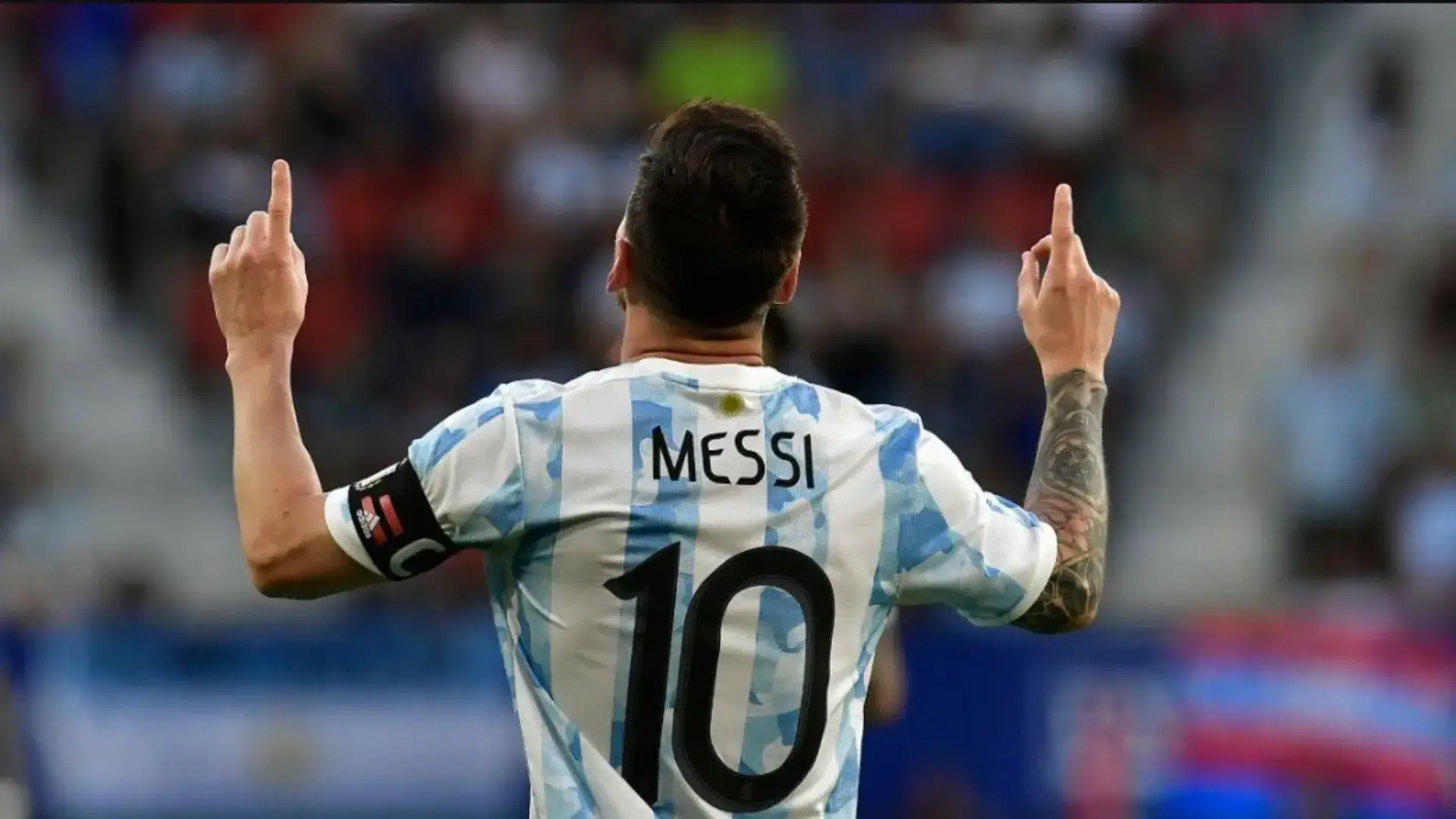
Messi's number 10 shirt can remain unused whenever regulations allow, staying part of his historic legacy. However, if Argentina qualifies for another World Cup under the current shirt numbering rules, one of the national team players will have to wear the number.
Argentina tried to keep Maradona's number 10 shirt out of the 2002 World Cup, but FIFA stopped them. More than two decades later, Messi's shirt faces the same rule.