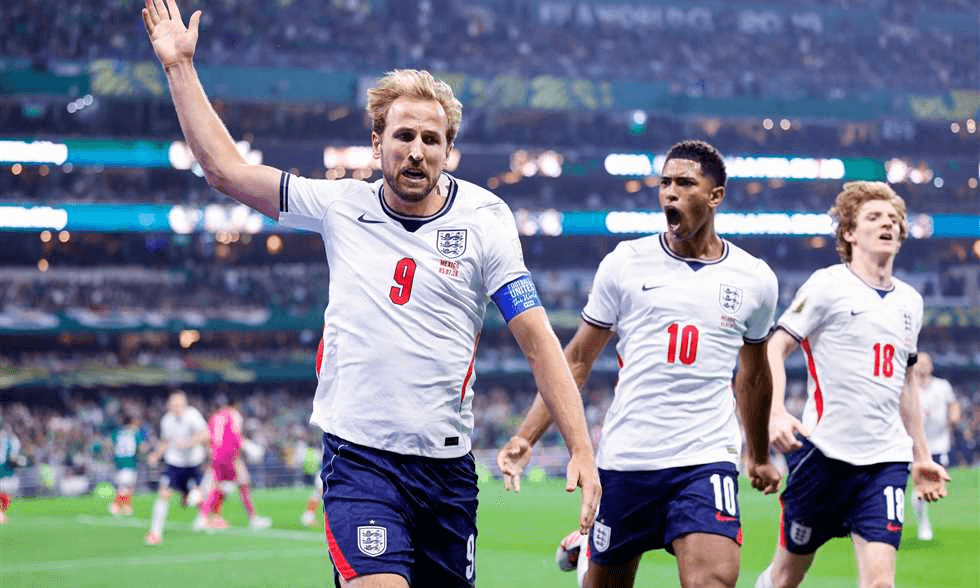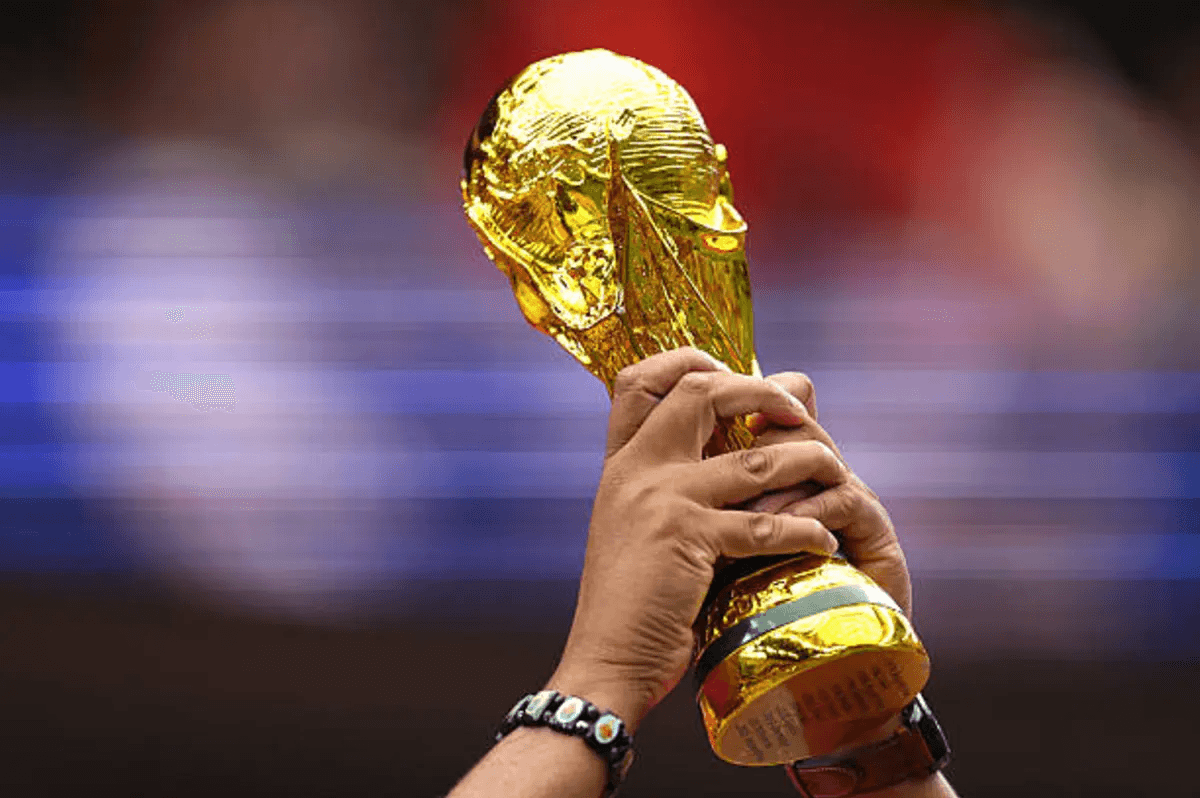
Football fans everywhere are anticipating the two semi-final matches of the 2026 World Cup edition, which is being held in the United States of America in partnership with both Canada and Mexico.
The French national team will face its Spanish counterpart in the first match on July 14 at the Dallas stadium in the American state of Texas, at exactly ten o'clock in the evening Cairo time, while the Atlanta stadium in the American state of Georgia will host the Argentina vs. England match on July 15 at exactly ten o'clock in the evening Cairo time.
The 2026 World Cup golden square is particularly special because, for the first time in history, the same four teams that top the FIFA world rankings have qualified for the semi-finals, with France occupying first place, followed by Argentina in second, then Spain and England in third and fourth, and therefore two heavyweight matches are expected.
The semi-final encounters carry a historical character dating back more than four centuries, as before competing for the golden cup, the same four countries fought over a group of islands called the Falkland Islands or Malvinas, located about 500 kilometers off the coast of Argentina.
A four-way struggle over a group of islands
The vast majority believe that the Falkland Islands conflict is limited only to Argentina and England, but in reality the equation also included both Spain and France at one stage.
The Falkland Islands gained their importance in the eighteenth century due to their strategic location, as at that time there were no canals such as the Suez and Panama canals, for example, so ships that wanted to travel between the Atlantic and Pacific oceans had to sail around the southernmost tip of South America, and here comes the strategic importance of the islands as they were an ideal station for replenishing supplies and repairing ships, and therefore the struggle of the major European powers to impose control over them was inevitable.
In 1764, France established the first permanent settlement on the islands, but the French presence did not last long, as Spain, which considered the region within its sphere of influence in South America, objected to the French presence, and under the European understandings at the time, France agreed to transfer the settlement to Spanish sovereignty in 1767 in exchange for compensating the French government for the resources it had spent during its colonization period.
But while France was controlling the eastern part of the islands, Britain also entered the scene and established its settlements on the western islands starting from 1765, later beginning after five years a crisis that almost ignited a wide European war, as after Spain expelled the British garrison in the west, the latter considered that an attack on its sovereignty, but after external pressures Spain agreed to return the British to their settlements.
The English presence did not last long, as in 1774 Britain was suffering financially due to its wars in North America, so it was forced to withdraw from the Falkland Islands, leaving behind an official document proving its right to sovereignty over the islands, which later became a fundamental point in the British argument.
Spanish protection over the entire islands continued until 1811 when it withdrew its forces due to the outbreak of the independence wars of the peoples of South America at that time, and here comes Argentina, which considers itself the legal heir to the Spanish possessions in the region, as after independence and in 1820 the government in Buenos Aires declared its sovereignty over the islands and the Argentine flag was raised over them, only for Britain to return after that moment by a full 13 years and demand its right to the islands, expelling the Argentine governor and officially declaring the Falkland Islands a colony under the British Crown, and from here the conflict began that has continued to this day.
From the 74-day war in 1982 to the 2013 referendum
Regaining the Falkland Islands remained a distant dream for the Argentines for more than a century, until the military regime ruling Argentina in 1982 decided to retake the islands, as Argentina at that time was living through a suffocating economic crisis and popular protests were increasing day after day, so the regime saw that uniting the people behind a specific national goal would restore its popularity.
The Argentine regime at that time believed that Britain would not wage war to regain a group of islands more than 13 thousand kilometers away from it, but that was an ill-calculated assumption, as British Prime Minister Margaret Thatcher sent a huge naval fleet to retake the islands by force.
The war lasted 74 days and ended with the Argentine surrender after heavy loss of life, and thus the popularity of the military regime collapsed completely and it was forced to relinquish power, returning the country to democratic rule, but the Falkland Islands remained a national issue in Argentina studied by children in schools generation after generation.
In 2013, the Falkland Islands government held a referendum on whether the islanders wanted to be a British or Argentine territory, and the result was that 99.8% voted for the continuation of British sovereignty, and Argentina rejected the result of that referendum on the grounds that most of the Falkland Islands residents are originally descendants of the first British colonists.
The transfer of the conflict to the pitch did not end the debate
In the 1986 World Cup, the war was still present in minds and the wounds were fresh, and with the Argentine national team facing its English counterpart in the quarter-final match, discussions returned anew to flare up around the issue.
None of the players from either team wanted to drag the political conflict into a football match before the game, but the match itself carried another kind of controversy that will never cease to be discussed.
In the second half of the match, specifically in the 51st minute, one of the most controversial moments in football history occurred, when the English goalkeeper Peter Shilton came out to save the ball, Maradona jumped with him raising his left arm and then directed the ball into the net with his hand, and the goal was awarded amid great protests from the England national team players.
Maradona was not satisfied with that, coming after that in the 55th minute to amaze the whole world once again but this time with his exceptional skill, when he ran with the ball from midfield, dribbling past six English players including the goalkeeper and scoring the second goal, confirming his country's national team's qualification, and this goal later turned into an immortal icon and was called the "Goal of the Century".
The English considered their loss came by cheating and directed all their anger and frustration toward the match referee, while Diego Armando Maradona for his part described the goal as coming by the "Hand of God" in reference to the divine care that accompanied him and his teammates on the team, especially since they won the World Cup title after overcoming the English national team.
The two teams faced each other again in the round of 16 of the 1998 World Cup, and the match witnessed the famous sending off of David Beckham after his clash with Diego Simeone, ending the match in a 2-2 draw and Argentina winning on penalties, and in the 2002 World Cup they faced each other for the last time but this time in the group stage, in a match where Beckham got his revenge with a clean 1-0 victory scored from the penalty spot.
The intensity of the hostility fading on and off the pitch
Before the 2026 World Cup semi-final between the two teams, that hostility was no longer present as it once was, even Maradona's hand goal no longer provokes the English as before, as former England striker Gary Lineker did not hide later and on more than one occasion his great admiration for Maradona and affirmed that he always considered him a football legend and the best player in its history, despite the bitterness left by that goal which he witnessed with his own eyes from the pitch.
Over the years, Argentine players have become more active in Premier League clubs, as the national team squad participating in the World Cup includes 6 players who play for Premier League giants such as Manchester United, Chelsea, and Liverpool.
In the context of the match, Emiliano Martínez, the Aston Villa goalkeeper and Argentina national team player, said: "Facing England has a special character for me, I have a lot of respect for that country because my children were born and raised there, and I have been living there for 16 years, so we must enjoy the match and try to win it as usual."