"Would someone starve who has food in his house, or would the inhabitants of an island surrounded by water on all sides thirst?"
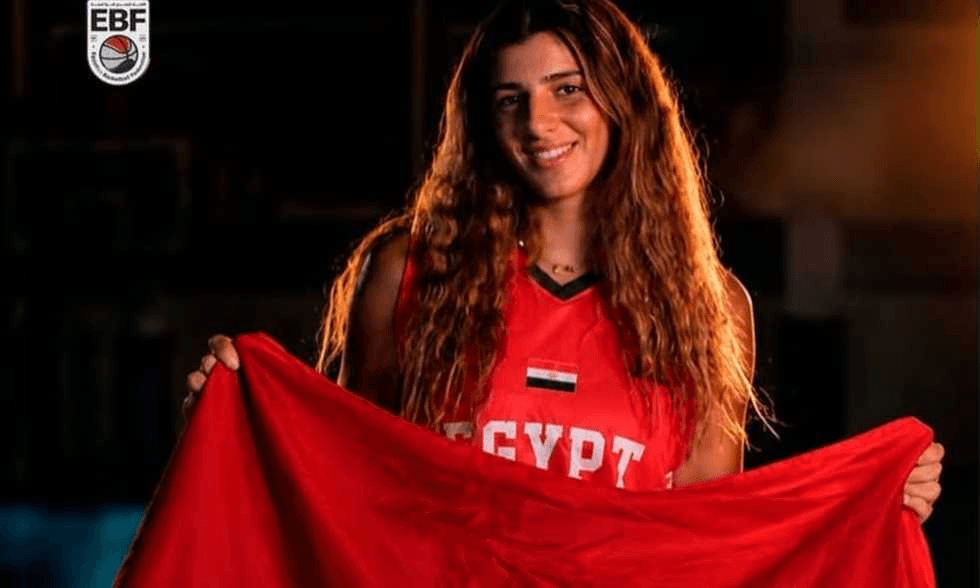
A metaphorical saying that may summarize the reality of Al-Jazeera Club with one of its most prominent rising talents in women's basketball, a player who has not yet completed her twentieth year.
July 2026
The final whistle announces the crowning of the Egyptian women's national basketball team with the title of the FIBA 3x3 Youth Nations League 2026 series for the Africa/South region, securing a qualification ticket to the FIBA 3x3 World Cup finals under 23 years old in China, and Khadija Osman was one of the heroines of this achievement.
September 2026
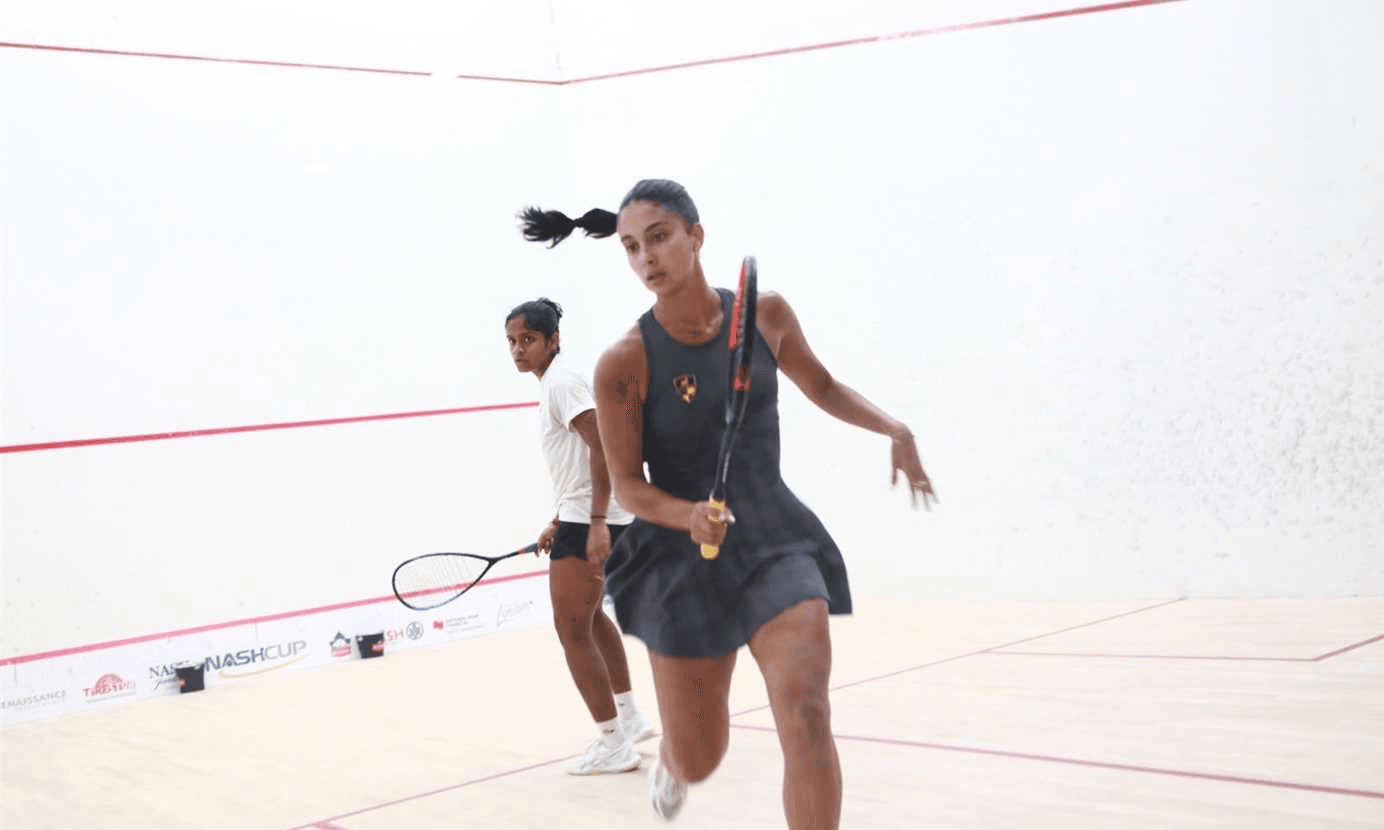
At around nine in the morning, she sits inside the halls of the American University in Cairo drawing engineering plans in the Department of Architecture, and by the end of the day she wears the Al-Jazeera shirt in preparation for the local season competitions, living between two different worlds without one overshadowing the other.
Khadija Osman was born in 2007, and began her journey with basketball at an early age after trying out more than one sport, before finding her true passion inside the game's courts.
Despite her young age, she succeeded in establishing herself within the ranks of Al-Jazeera's first team, and progressed through all of Egypt's youth national teams until she reached the senior national team, achieving numerous individual and collective accomplishments.
Those details that combine study halls and basketball courts are united under one name: Khadija Osman.
The young player has become one of Al-Jazeera's most important elements, thanks to her ability to shoulder responsibility and decide major matches, affirming that discipline off the court is always reflected in creativity on it.
And FilGoal.com takes you into a conversation with Khadija Osman, to talk about the behind-the-scenes of her journey, how she balances studying architecture with basketball, and her ambitions with Al-Jazeera in the new season, which she describes as the most important in her career, in addition to her vision for the future of women's basketball in Egypt compared to abroad.
Searching for passion.. and Hajar Amer the role model
In her childhood, Khadija Osman went through the usual sports experiences that many children pass through, moving between more than one game in search of the sport in which she would find herself.
She describes that stage, saying, "I used to practice more than one sport, but I felt bored all the time, and I didn't have the feeling that I was doing something I truly loved."
But upon reaching the age of eleven, and with signs of height appearing in her physical build, those close to her advised her to try basketball.
She continues, "I tried basketball for the first time at school, and felt a completely different sensation. Then I joined the club's academy, and from the very first training session I realized I had found my true place. I no longer went to training as a duty, but rather enjoyed every moment on the court, because the game is collective and resembles going out with friends, and from that day I never thought of stopping."
Over the years, Khadija did not view basketball as merely a hobby, but began searching for local role models to emulate.
She said, "For me, the Egyptian player is the best in the world. I used to follow Captain Hajar Amer, a Sporting player, and tell myself that I wanted to reach her level one day. For me, she is a legend in commitment, giving, and leadership."
She added, "Now when I face her on the court I feel great happiness, because I focus on learning from her, how she moves and how she plays, and how I can deal with her during the match."
Botswana Championship.. A younger national team challenges everyone
Last July, the Egyptian women's national basketball team won the title of the FIBA 3x3 Youth Nations League 2026 series for the Africa/South region, securing the official qualification ticket to the FIBA 3x3 World Cup finals under 23 years old in China.
Khadija believes that this achievement was not merely a new title added to the national team's record, but rather proof of the Egyptian players' ability to compete against older and more experienced teams.
She said, "The first feeling after the end of the final match was great relief, because we succeeded in achieving the goal, and we didn't go just to participate."
She explained, "The tournament is designated for players under 23 years old, while the Egyptian national team participated with an under-21 team, and despite the age difference and physical challenges, we succeeded in winning the title. Wearing the Egyptian national team jersey is a great responsibility, and therefore we were required to achieve the best possible result."
She added that the national team delivered outstanding performances from the start, as it won the first three matches before reaching the 21-point mark, before the nature of the competitions changed in the following days.
She said, "3x3 competitions rely more on physical contact, and the refereeing is more lenient. Most African teams rely on physical strength, while we rely on skill and tactical intelligence."
She continued, "We faced some setbacks on the fourth and fifth days, but the technical staff led by Captain Karim Ismail did not stop working, and technical meetings continued throughout to analyze every detail and correct mistakes."
She concluded this section by saying, "We entered the final day with one slogan: either we return to Egypt as champions, or everything we have given throughout the tournament goes to waste. We did not think about the strength of the opponents or the refereeing decisions, but focused only on winning, and thank God we succeeded in achieving our goal."
"Even if my finger were amputated, I would play the final".. An injury that did not prevent the dream
The difficulty of the tournament did not stop at the strength of the competitions and physical contact, but extended to a real test of Khadija Osman's will, after she suffered a toe injury before the final day of the tournament.
Khadija recounts those moments, saying, "I received a strong blow to my toe, and felt severe pain, but what concerned me most was that the injury would not prevent me from playing the final match."
She added, "Dr. Ahmed Atef intervened quickly with ice and anti-inflammatories, which eased the severity of the pain. When the technical director asked me if I was able to play, I told him with confidence that I was ready."
But the decision was not easy, as the injury was extremely painful.
She continued, "I didn't think about the amount of pain at the time, but all my focus was on making up for what happened on the fourth and fifth days, and helping my teammates win the tournament."
She added, "I told everyone around me: Even if my finger were amputated, I would play the final."
She added with a smile, "I took a painkiller and entered the match, and I didn't feel my finger at all, I was only thinking about winning."
She revealed that the truth emerged after returning to Cairo.
She said, "After returning, the X-ray showed a fracture in the finger. And if I had known that before the match, I would not have hesitated for a single second to play the final for the sake of the Egyptian national team."
Before the China World Cup.. Confidence in competing with the big teams
Khadija Osman believes that women's basketball in Egypt is experiencing a different phase, whether in terms of technical, administrative, or media support, compared to what was happening in previous years.
She said, "The support has become much greater than before. During the Botswana tournament, there was daily communication from the 3x3 committee, the Ministry of Youth and Sports, and federation officials, and messages of support did not stop throughout the tournament."
With the FIBA 3x3 World Cup finals in China approaching, Khadija realizes that the size of the challenges will be greater, but she believes in the national team's ability to compete.
She said, "In 5x5 competitions, physical differences appear more clearly, in addition to the differences in professional systems, nutrition, and preparation found in Europe."
She added, "As for 3x3 competitions, individual skill and tactical intelligence play a greater role due to the short match time, and therefore I see that our chances of competing are good."
She praised her teammate Soraya Mohamed, saying, "Soraya Mohamed is one of the best players in 3x3 competitions, and I see her as a global role model in this game."
She concluded, "I am confident in our ability to compete with European and Asian teams, and deliver a tournament worthy of Egypt's name."
Between architecture and basketball.. The most important season
Khadija is preparing to embark on what she describes as the most important season in her career with Al Jazeera, after gaining significant experience from her local and international participations, in addition to her experience in 3×3 competitions, which she believes contributed to developing her technical level.
She said, "Playing 3×3 helped me a lot in developing my individual skills, making decisions faster, and shooting under greater physical pressure."
She added, "Our ambitions with Al Jazeera are great this season, and we want to reach the final match and achieve a better position than what we achieved last season."
She continued, "I am confident that the experiences I gained with the national team will be directly reflected in my level with Al Jazeera."
Professionalism? Priority to making history with Al Jazeera
Although the dream of playing professionally abroad haunts most players, Khadija believes that the decision must be well-considered, especially with the development the Egyptian league is witnessing.
She pointed out, "The Egyptian league has developed significantly and become more competitive, and we have players and coaches who possess distinctive technical thinking."
She added, "If an exceptional professional opportunity arises that suits my ambitions, I will definitely pursue it, but at the present time, my priority remains to develop inside Egypt and make history with Al Jazeera Club."
Khadija believes that developing players requires a continuous program, not just before tournaments.
She continued, "I hope for an increase in physical training camps throughout the season in coordination with the clubs, with the implementation of unified programs for physical preparation and nutrition, because that will make the players more ready for international competitions."
She also touched on the focus of media attention on a limited number of clubs.
She said, "Clubs that host continental tournaments naturally receive greater media attention, but if other clubs like Al Jazeera and Heliopolis host similar tournaments, a larger number of talents will appear before the public and the media."
A'ja Wilson.. The global role model
In concluding her interview with FilGoal.com, Khadija Othman revealed her global role model.
She said, "I follow A'ja Wilson regularly, not only because she is a distinguished player, but because of her lifestyle."
She added, "She takes responsibility in the most difficult moments and possesses a leadership personality on and off the court, which is why I consider her a model of success and athletic discipline."