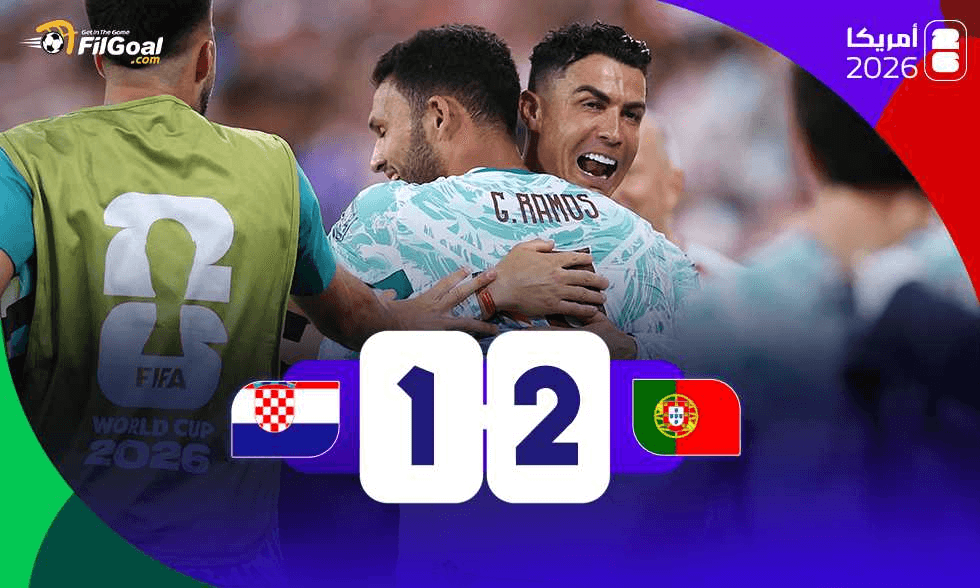


The International Football Association (FIFA) announced the reason for canceling Croatia's killer equalizing goal against Portugal in the Round of 32 of the 2026 World Cup, which is the connected ball technology.
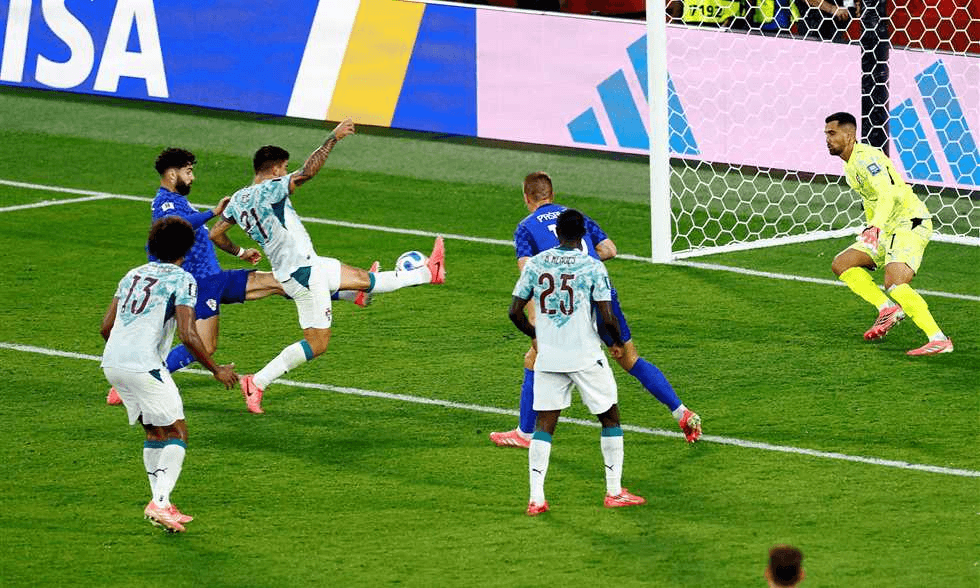
The Croatian national team equalized in the 90+13 minute, but the goal was canceled due to offside after returning to video technology.
The technology detected a Croatian player touching the ball before it reached his offside teammate in the killer goal scene, thus it was canceled, and Portugal was declared the winner amid Croatian anger.
FIFA's statement came
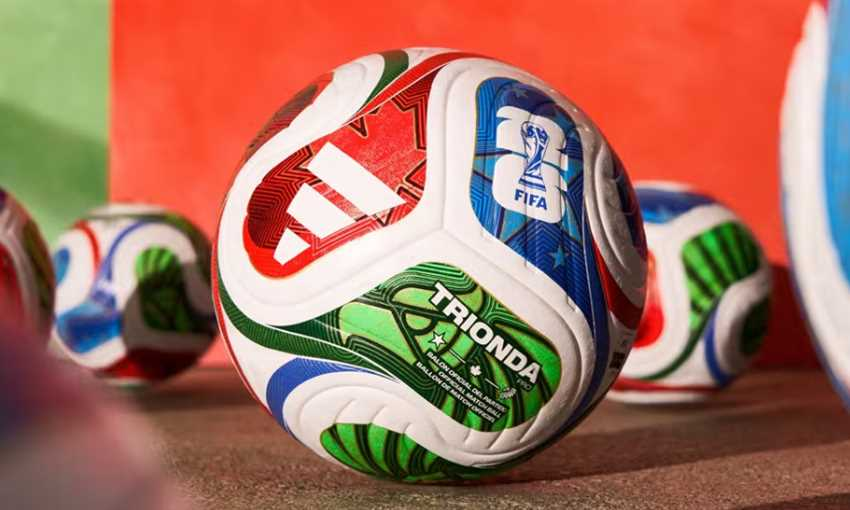
"According to the data provided by the connected ball technology housed within the Trionda ball, the official ball for World Cup matches, it was proven that Igor Matanović, a Croatian player, touched the ball before scoring the goal against Portugal, allowing the referee to correctly determine the offside situation and cancel the goal.
The IMU sensors inside the Trionda ball can detect any slight contact, which is displayed to viewers in the broadcast as a 'heartbeat graph,' allowing officials an unprecedented level of data to make quick and accurate decisions."
According to the data provided by Connected Ball Technology housed within the @adidasfootball Trionda, the official match ball of the @FIFAWorldCup, it was proven that contact was made by Croatia's #20 Igor Matanović in the build up to the goal against Portugal, allowing the… pic.twitter.com/AyBz11N3wV
— FIFA Media (@fifamedia) July 3, 2026
FIFA had previously revealed on its website in the discoveries and technology section about the "connected ball technology."
What is connected ball technology?
Connected ball technology is an innovative system introduced by FIFA in collaboration with Adidas, based on integrating advanced sensors inside the match ball to provide accurate and instant data about its movement and position.
This technology enhances decision-making processes, especially for video referees, by providing highly detailed data about the ball's dynamics, such as the precise moment of contact, which is important in determining offside, in addition to information about its speed and trajectory.
This technology plays a pivotal role in semi-automated offside decisions and other critical match situations, ensuring greater accuracy and fairness in modern football, and enhances the fan experience by providing a deeper understanding of goal-scoring mechanics.

What problem did the technology come to address?
One of the main challenges during the development of semi-automated offside technology was ensuring the correct point of ball play was chosen in the crucial pass in a potential offside situation.
This process takes a relative amount of time, and relying on video alone is hindered by the number of available frames, which is often 50 frames per second.
Therefore, there was a need for technology that enhances accuracy and provides highly reliable automated information about the moment of ball contact.
An additional benefit quickly emerged, as this technology also allows confirmation of any ball touch during play, including potential handball situations that were previously difficult to resolve using video alone.
How does the technology work?
A small inertial measurement unit sensor is integrated inside the ball, typically operating at a frequency of about 500 Hz.
This sensor captures data 500 times per second, tracking the ball's acceleration and precise movements in three dimensions.
This data is used to calculate the moment of contact, then this information is transmitted in real-time to the video operations room, where it is integrated with player tracking data from stadium cameras to assist video assistant referees.
This technology supports semi-automated offside systems by accurately determining the point of ball play, i.e., the precise moment the player touches the ball, allowing for faster and more accurate offside decisions.
It also helps analyze other situations, such as hand touches or penalty kicks, by providing detailed data about the touches.
How was this technology tested?
A series of tests were conducted in stadiums between 2020 and 2022 to ensure the accuracy of the connected ball data and its seamless integration with video technology systems.
Now, before the start of any FIFA tournament, FIFA's innovation team conducts a set of rigorous tests and protocols with all technology providers to ensure that the connected ball works in the best possible way and contributes to more accurate refereeing decisions during matches.
The same technology caused Cristiano Ronaldo's goal against Uruguay in 2022 to be credited to Bruno Fernandes because he did not touch the ball.
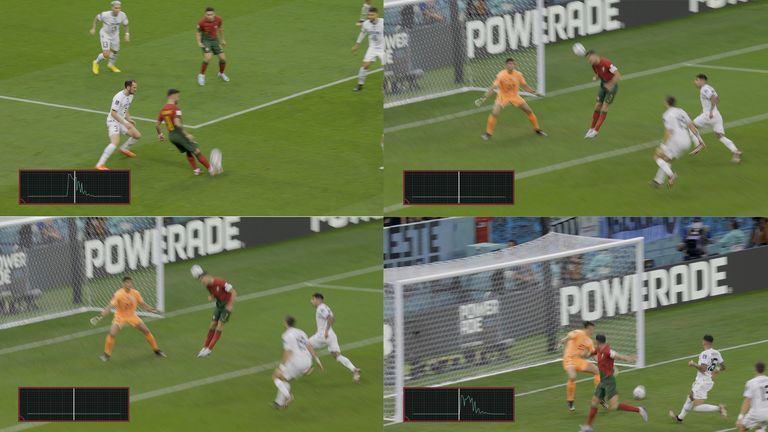
It also appeared in 2026 in the goal of Sweden's Matthias Svanberg against Tunisia in the group stage, to confirm whether Alexander Isak touched the ball or not.