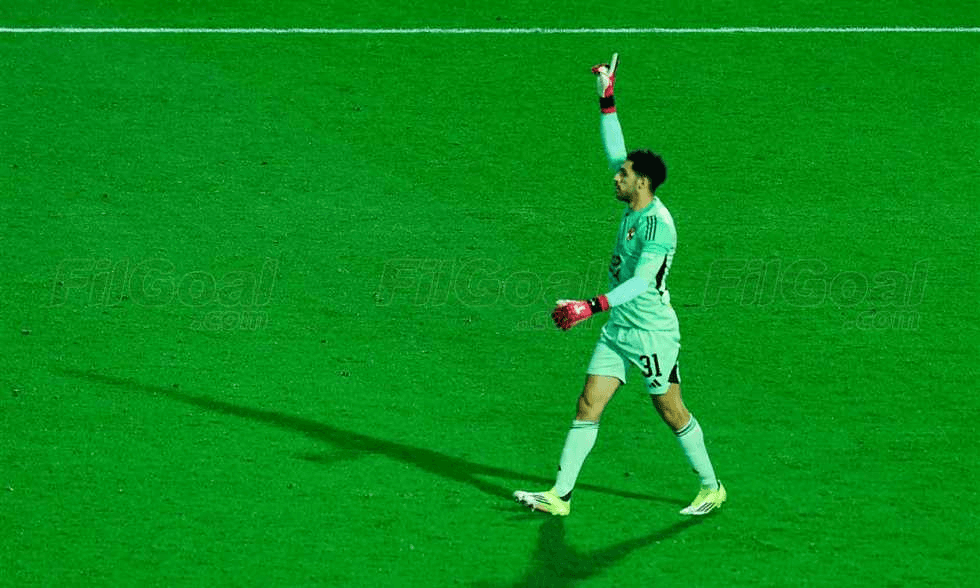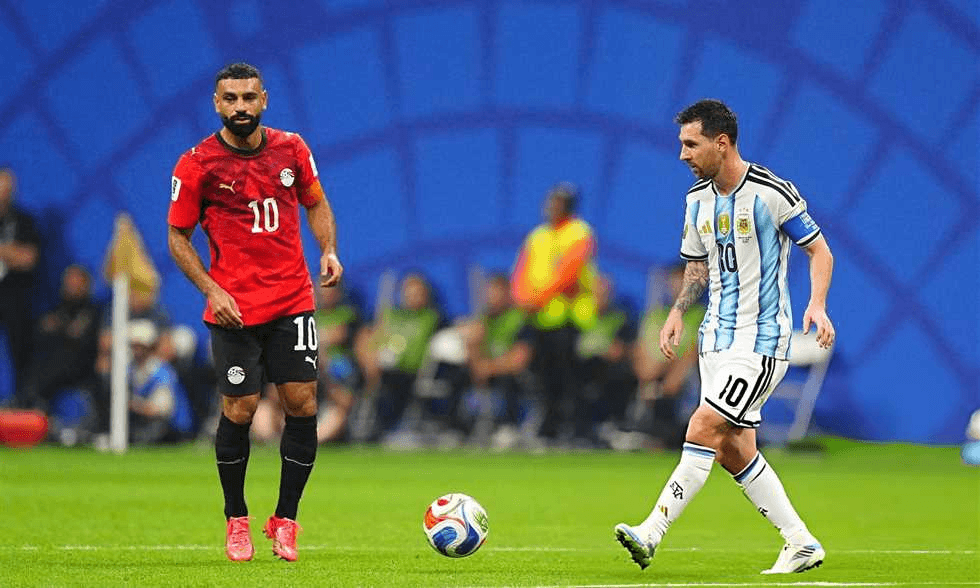

FIFA issued an official clarification regarding the most prominent controversial refereeing incidents in the Egypt vs Argentina match, which ended with the Tango dancers winning (3-2) in the round of 16 of the 2026 World Cup, following a wave of widespread criticism that accompanied the decisions of French referee François Letexier.
The match witnessed major controversy after a goal for the Egyptian national team was disallowed due to a foul at the start of the attack, in addition to the Pharaohs' demands for a penalty for Mohamed Salah seconds before Argentina's third goal, incidents that sparked widespread objections from the Egyptian players and technical staff.
Notably, refereeing experts and former stars differed over the validity of the French referee's decisions, confirming the existence of a refereeing controversy that prompted FIFA's intervention.
A number of legends, most notably Alan Shearer, and Gary Neville, and Roy Keane believe that the Egyptian national team was subjected to refereeing injustice, while former Argentine star Claudio López agreed with them.
Meanwhile, English refereeing expert Graham Scott confirmed that the decision to disallow Egypt's goal was wrong, while the specialized "Archivo VAR" network believes the goal was invalid and the video assistant referee's intervention was appropriate.
In an attempt to put an end to the controversy, Italian Pierluigi Collina, chairman of the FIFA referees committee, came out to explain the refereeing basis on which the decisions were based, confirming that the video assistant referee applied the approved protocol in both cases.
Collina: This is why Egypt's goal was disallowed
Collina explained that FIFA does not usually comment on individual incidents during tournaments, but saw the need to clarify some points due to the volume of controversy that was raised.
He said via FIFA's official website, today, Thursday, "Usually we do not prefer to comment on specific refereeing incidents during tournaments, but we recently clarified how referees deal with players' attempts to obstruct goalkeepers, and therefore we saw the need to clarify another point that sparked a lot of discussion".
He added, explaining the mechanism of the video assistant referee's work, "After any goal is scored, the video assistant referee reviews the entire attacking possession phase. And if a foul is detected during the build-up of the attack and it had a direct impact on the goal, the video assistant referee recommends that the referee review the incident on the screen".
❌ After video assistant referee review... the referee deprives the Egyptian national team of a wonderful goal!
— beIN SPORTS (@beINSPORTS) July 7, 2026
🤔 Do you support the decision to disallow the goal? ✍
#WorldCup2026 pic.twitter.com/2x2trHLpbs
He stressed that the "VAR" protocol does not specify a certain distance or time for review, saying "There are no time limits or specific distance between the foul and the goal for it to be taken into account".
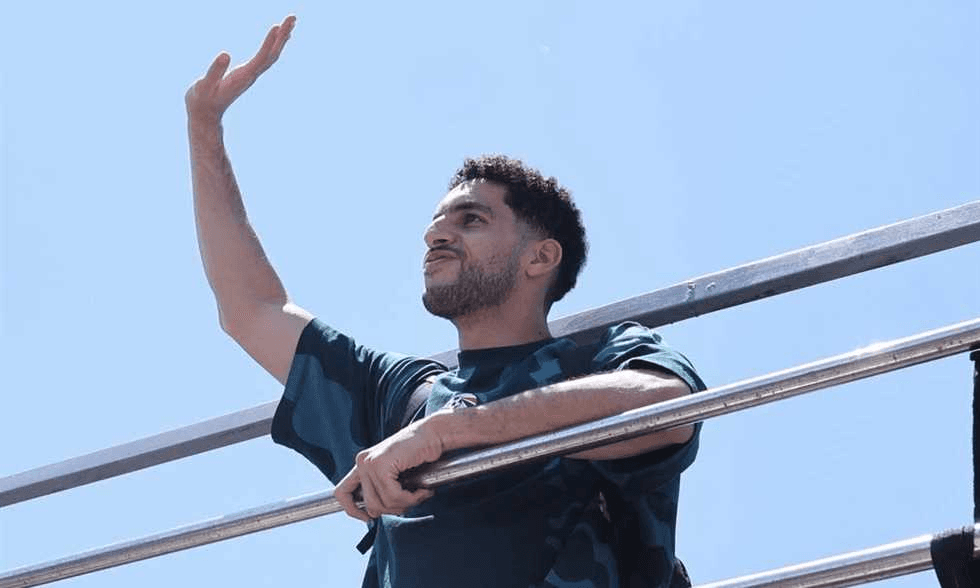
Regarding the disallowed Egyptian goal incident, Collina said "In the Argentina vs Egypt match, Egyptian player Marwan Attia clearly stepped on Lisandro Martínez's foot".
He added "From our point of view, the foul remains a foul, regardless of how clear it is. And if the referee on the field did not see it, the video assistant referee has the right to intervene".
Why was a penalty not awarded to Mohamed Salah?
FIFA referees committee chairman also addressed the incident in which the Egyptian national team demanded a penalty for Mohamed Salah before Argentina's third goal.
He said "If no foul is detected during the build-up of the attack leading to the goal, the video assistant referee informs the referee of that".
He added, explaining the difference between a foul and legitimate contact "Stepping on the opponent's foot is a foul, but if the defender touches the ball first and then natural contact occurs afterward, there is no foul".
He confirmed that this interpretation applies to Salah's challenge with Julián Álvarez, saying "The referee and the video assistant referee considered the contact between Mohamed Salah and Julián Álvarez to be natural contact in football".
Mohamed Aboutrika: "I want my right"#WorldCup2026 pic.twitter.com/xgHV59hShc
— beIN SPORTS (@beINSPORTS) July 7, 2026
And FIFA's official website revealed a new camera angle of the challenge, saying it shows that Álvarez succeeded in playing the ball first before contact occurred with the Egyptian national team captain.
He added that Salah did not continue demanding the penalty, but quickly got up and returned to defensive support, before Argentina launched the counter-attack from which they scored the winning goal.
Collina: Some decisions will remain subject to interpretation
Collina concluded his statements by confirming that some incidents will remain open to differing points of view, but stressed his confidence in the referees' performance during the tournament.
He said "There will always remain room for personal interpretation in some refereeing decisions, but we are satisfied with the way these principles were applied throughout the tournament".