For nearly a century, player numbers have sailed through the waters of Egyptian football. Dozens of players have worn the Egypt national team jersey and participated in its official matches, starting from participation in the 1934 World Cup and the 1936 Berlin Olympics, and spanning African Cup of Nations tournaments, World Cup qualifiers, the Africa Cup of Nations, and other official competitions. This is the circle within which Egyptian players moved to record their own statistics, and why not exceptional ones for some of them.
Abdel Karim Sakr.. The Miracle Youngster with an Unsurpassed Record
Abdel Karim Mahmoud Ezzat Sakr, born in the Abbasiya district of Cairo, saw his talent emerge when he joined the Fuad I Secondary School team. He was nicknamed "The Magician" and "The Tamer" due to his superior skill and unique ability to tame the ball with ease.
He joined Al Ahly club in 1935, then transferred a few years later to Zamalek (which was mixed at the time) in 1940.
The holder of this unique record is the youngest player to represent the Egyptian national team in an official tournament, as well as the youngest player to score in an international match for Egypt throughout its history. This occurred during the Austria match at the 1936 Berlin Olympics, according to likely sources, at the age of 17 years, 8 months, and 28 days.
Mido.. El-Gohary's Confidence Creates a Giant Start for the Global Star
Ahmed Hossam Hussein Abdel Hamid Wasfi, born on February 23, 1983, in Cairo, had a prolific career that began with Zamalek club, where he joined the youth academy in 1990 and progressed through its ranks until being promoted to the first team in the 1999/2000 season. He did not find what he wanted and felt there were no significant opportunities for him within his club, so he decided to leave for Belgium, specifically to Gent club.
Before Mido became sufficiently known in local circles, "The General" Mahmoud El-Gohary decided to call him up and include him in the national team squad. El-Gohary ignored all advice and complaints from senior players that Mido was still too young, and started him as a surprise for the first time against Senegal in the World Cup qualifiers at Cairo Stadium on May 6, 2001. Mido succeeded in scoring the only winning goal against Senegalese goalkeeper Tony Silva, placing himself second among the youngest Egyptian players who scored goals in an official match, at the age of 18 years, 2 months, and 13 days.
Hamza Abdel Karim.. The Egyptian Haaland and a New Record
On January 1, 2008, Hamza Mohamed Abdel Karim Salim was born in Cairo. He began his career with Al Ahly's youth teams and shone with the Egyptian national team in the 2025 FIFA U-17 World Cup.
In February 2026, he moved to Spanish club Barcelona on loan from Al Ahly, becoming the first Egyptian player in the history of the Catalan club. After shining with the team during preparations for the new season, Barcelona activated the purchase option permanently in June 2026, signing him to a contract until 2029, then later renewing his contract until 2030.
Juba Stadium witnessed Hamza scoring his first official goal for the Egyptian national team against South Sudan, in the second minute of stoppage time, concluding the Pharaohs' five-goal victory in the qualifiers for the 2027 Africa Cup of Nations. This goal placed him third in the ranking of the youngest players to score for Egypt in official matches, at the age of 18 years, 8 months, and 28 days.
From Amateurism to Boldness.. A Legacy Inherited by Greats
From Abdel Karim Sakr, "The Tamer and The Magician," in the era of amateurism, to great boldness between "The General" and his student, a player needs not only talent but also a bold coach who trusts his personality before his talent, and in his dominant presence and self-proving.
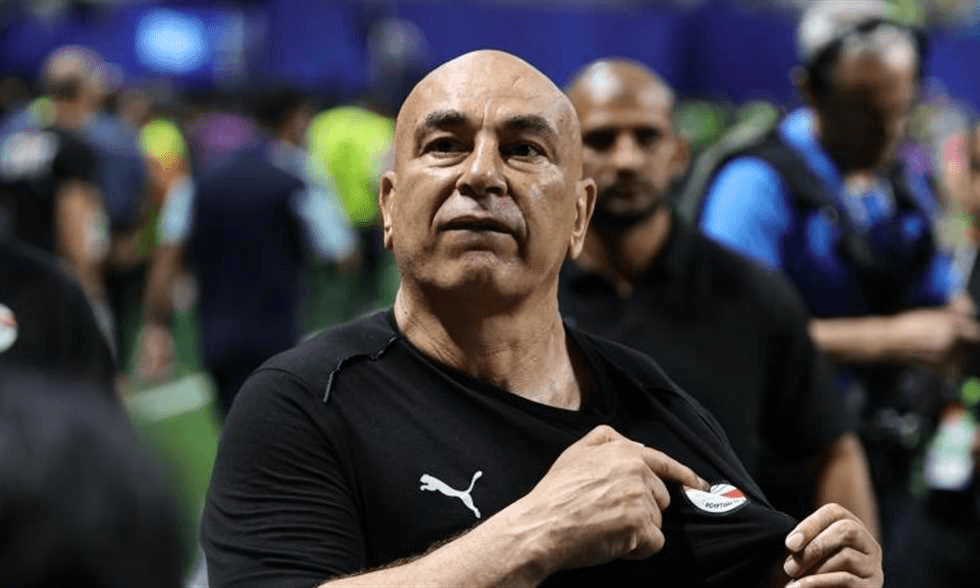
Boldness here differs; it is a challenge to prevailing logic and success in doing so, something that greatly distinguished El-Gohary and seems to distinguish "The Dean" Hossam Hassan as well.
El-Gohary's and Hossam Hassan's decisions were not merely "risks" in a moment of enthusiasm, but rather a strategic vision that sees in the young player what others do not see, granting him confidence before the world grants it to him. In national teams, where losing means fan anger and media blame, fielding a young player is akin to walking on hot coals. But history does not remember coaches who played safely; it remembers those who took risks and created legends.
So boldness here is not a luxury, but rather the small detail that separates good from great.