
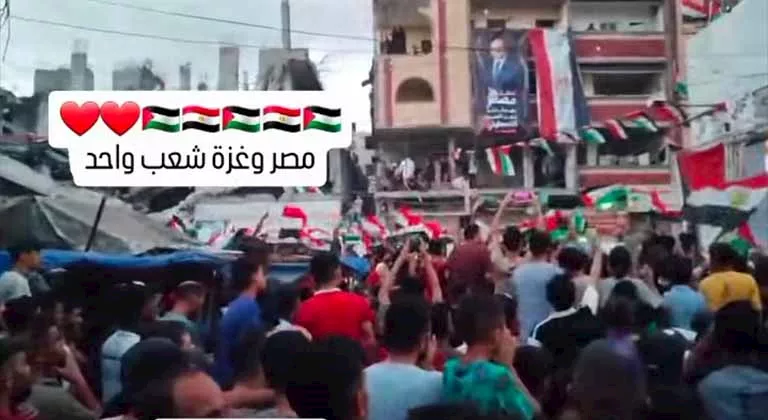
Amid the sounds of bombing and the flight of Israeli drones, a different kind of sound emerges, chants mixed with feelings of sadness and joy, despair and hope, a small window through which thousands of Gazans look at life from amid the rubble of destroyed homes, a temporary space to escape from a painful reality. This window was the 2026 World Cup matches.
Amid the sounds of bombing and the flight of Israeli drones, a different kind of sound emerges, chants mixed with feelings of sadness and joy, despair and hope, a small window through which thousands of Gazans look at life from amid the rubble of destroyed homes, a temporary space to escape from a painful reality. This window was the 2026 World Cup matches.
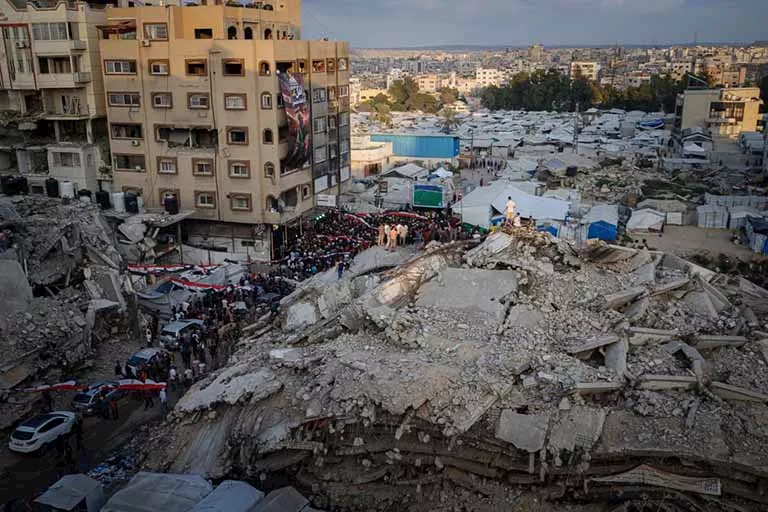
Abdul Rahman Ghanem, a Palestinian doctor, says in his interview with Laila Koura: "The bombing is still ongoing, but the targeting consists of assassinations, and amid this we follow the World Cup on large screens that existed before the war, and during the displacement from one area to another they take them with them".
The World Cup in Gaza on solar panels
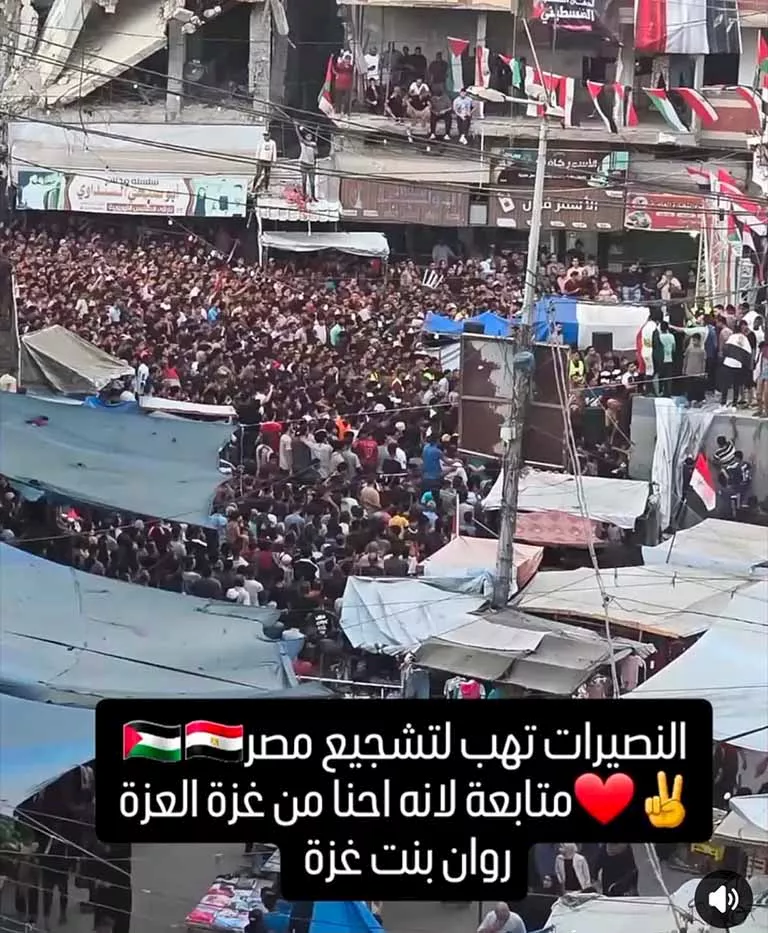
These screens, which are in the middle of the markets, operate using batteries powered by solar panels. Some tried to preserve them as much as possible from the bombing during displacement, and Abdul Rahman says: "Any family that has a battery takes it with them; it gets charged during the day, but not everyone has these batteries. We don't have solar panels or batteries, so we charge our phones in the morning for money at people who have these panels".
And amid the camps, cafes have turned from walls and ceilings into "shawadir," cloth bags fixed over tents, seats bearing traces of bombing, and screens running on batteries. Amid these conditions, the people of Palestine did not watch all the World Cup matches; sometimes internet difficulties prevent them, and at other times the batteries run out.
Despite all the circumstances and what the Palestinians are suffering, they gather in the squares to follow the Arab matches in the World Cup, especially the matches of the Egyptian national team, as the borders between Egypt and Gaza have formed a strong bond between the two peoples, and Abdul Rahman says: "The people of Gaza love sports and are very interested in football, especially Egyptian football, especially since our grandfathers and fathers were raised on Egyptian football, Al Ahly and Zamalek, because they used to travel to Egypt and come back again, and all the roads were open".
Hossam Hassan's stance.. Palestine in the World Cup
This relationship took a new path, after Hossam Hassan's stance, the coach of the Egyptian national team, carrying the Palestinian flag after the match against Australia, and his statements about the genocide and what is happening in Gaza. This stance made everyone interested in football and the World Cup; everyone started waiting for Egypt's matches, women, children, elders, and youth. Abdul Rahman says: "Hossam Hassan's statements made a big difference to us, and made even those who don't follow football follow it and cheer for the Egyptian national team, even girls or women started waiting for the Egyptian national team's match times and cheering for it".
He continued: "Hossam Hassan stirred in us all the feelings of brotherhood and love, and made us feel that there is still someone conveying our voice, and striving to bring our cause to the world in a country that is the basis of the genocide, even at the expense of his loss and exit from the tournament. He made us not doubt for a moment that we are not one people; no, we are one people, and our cause is one, and that in our joy, loss, and gain we are holding hands with each other, and sharing all moments together".
In the Nuseirat camp, Rawan Abu Shamala was following Hossam Hassan as he raised the Palestinian flag, carrying with him a message to the whole world that the war has not ended yet. While she was speaking to Laila Koura, a new bombing echoed nearby.
Amid the bombing, suffering, and economic conditions that Rawan and her people are enduring, Hossam Hassan's stance was a victory for them, who felt that the victory was not only for Egypt but for all of Palestine, and Rawan says: "We wished for victory, but Egypt truly won with the Palestinian flag. I cannot describe my feelings; Hossam Hassan affected us greatly. Hats off to him, because he feels the suffering we live in Gaza, and after the Egypt-Australia match we felt that we were the ones who won, for we are one people".
For his part, Muhammad Al-Sarhi considers the Egyptian national team to be his first team, and says: "The people of Gaza were raised from a young age loving and cheering for the Egyptian national team, Al Ahly and Zamalek, and we consider it our first team. Hossam Hassan's statements affected us greatly, and restored the spirit of patriotism, and that the people of Egypt and Gaza are one people, and sent us a message that we are not alone, and that there are people of pure metal standing by the great cause, and we are the owners of the right".
See also..