
In August 2026, Mohamed Salah sat inside his car, trying to hide behind a cap, watching the passersby on the streets from beneath it, observing their interactions and laughter, as if searching for something he had missed throughout the years of being away.
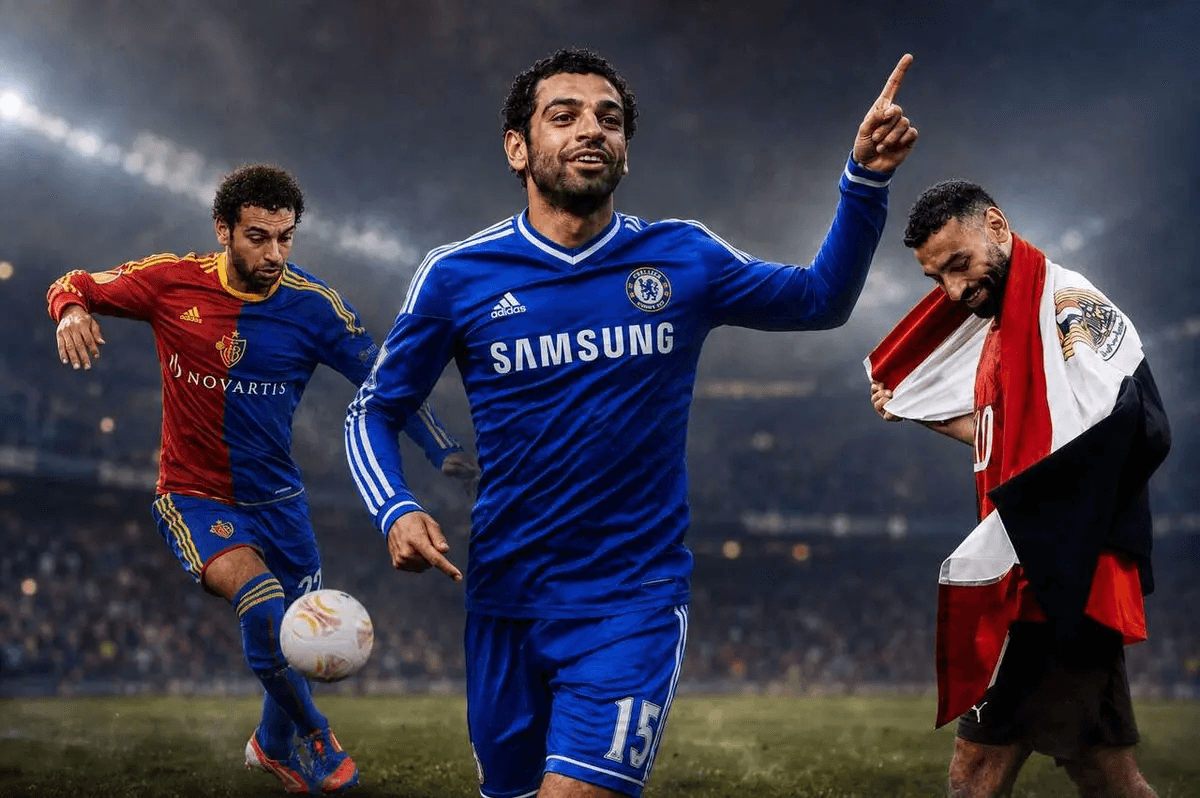
This scene, which Salah himself recounted, was a summary of a unique relationship he shares with Egypt, the country he left more than 14 years ago in search of a professional dream. His journey, which took him from Al-Mokawloon Al-Arab to Swiss club Basel, then to Chelsea, Fiorentina, Roma, Liverpool, and finally Turkish club Trabzonspor, has become one of the most prominent success stories in the history of Egyptian football.
In an interview via Trabzonspor’s official channel, Salah spoke about his longing for life in Egypt, saying: “I think I always miss the atmosphere you feel when you are among Egyptians... They love to have fun. When you are around any Egyptian, even when I go on vacation, for example, and find a group of Egyptians, it is a bit different.”
He added: “I miss that atmosphere, as we understand each other, and we understand the jokes and other things. So when I go there, I like to sit on the balcony and watch people and how they interact with each other, or be in the car and just watch everything... Even breathing the air there makes me feel happy.”
These statements brought to the forefront a question that has been present for years among Egyptian fans: Has Mohamed Salah finally been freed from the constraints imposed by his relationship with the national team, the fans, and the media? And has the relationship between the two sides returned to normal?
Salah: From the Dream of Professionalism to the Responsibility of “Hope”
When Salah left Egypt in 2012 heading to Swiss club Basel, he was not a fan favorite in the sense he later became. He was not a former player for Al-Ahly or Zamalek; he was just a young player from Al-Mokawloon Al-Arab traveling alone to Europe, carrying his personal dream and the dream of an entire country that one of its sons would become a world-class player.
In a previous interview with “On Sport” channel, Salah spoke about his beginnings in Switzerland, saying that when he went to turn professional, “no one knew me there,” and people treated him “as an ordinary person, not as a football star.”
He added that he had considered returning to Egypt to join Al-Ahly or Zamalek to become a star there, but he abandoned this idea so he could complete his professional career and adapt to his new life.
Salah said: “After qualifying for the World Cup, I realized how the public in Egypt sees me. It is much bigger than being a football player. I understood that I am a great hope for the people and the public in Egypt, and many of them wish to see their son like me. This is a great responsibility.”
“I Will Not Celebrate”: Salah Confronts the Blood of Egyptians
In August 2013, just one year after his transfer to Basel, another side of Salah’s relationship with his country emerged. He scored two goals against Bulgarian club Ludogorets and assisted a penalty, leading Basel to a 4-2 away victory in a match that put them on the verge of qualifying for the UEFA Champions League group stage.
However, Salah did not celebrate. After the match, he said in statements carried by ESPN before the game: “I will not celebrate any goal in any tournament. The situation in Egypt makes me feel extremely sad. Nothing is more important to me than the blood of my compatriots. No matter how important the match is, I will not celebrate until that stops.”
At the time, Salah was only 21 years old, but he chose to place the events taking place in Egypt above one of the most important moments of his European career.
When Politics Entered Salah’s Pitch
That same year, another crisis emerged during the match between Basel and Maccabi Tel Aviv in the UEFA Champions League qualifiers. Salah refused to shake hands with the opposing team’s players and instead focused on tying his shoelaces, before indicating his unwillingness to play the second leg.
However, Basel’s management insisted on his participation, so he eventually agreed. Salah said at the time: “Football is more important than politics, and this is my job. In my mind, I am going to play in Palestine, not Israel. I will go there, score, and win.”
Indeed, Salah scored Basel’s second goal in the second leg, which ended in a 3-3 draw, securing the Swiss team’s qualification with a 4-3 aggregate victory.
“The Mentality”: When Salah Criticized the Egyptian Mindset
As the years passed, Salah’s criticism no longer limited itself to political or organizational issues, but extended to what he considered a deeper problem in Egyptian football: the “mentality.”
In statements during one of the events, Salah spoke about the difference between the mentality he deals with in Europe and that present in Egypt. He said that “mentality” is not something Egyptians learn sufficiently, and that there is a problem with the lack of desire to learn and self-develop.
At that time, Salah was a player for English club Liverpool and faced criticism from fans, some of whom claimed he was abandoning his roots and suffering from a “foreigner complex.” Salah returned to the same idea in 2022, when he spoke about some people’s anger at him whenever he touched on the need to change the mentality, emphasizing that Egyptian football needs a change in administrative mentality for players to be able to maintain the same level for 10 or 12 years.
The 2018 Clash: Salah vs. the Football Association
Some linked Salah’s statements about the “mentality” to his presence at Liverpool, but he had previously clashed with the football system in Egypt while at Anfield. This occurred after the 2018 Russia World Cup, when Egypt exited the tournament without a single win.
Following Egypt’s participation in the World Cup, Salah posted several messages and videos criticizing the Football Association for what he described as poor organization during the national team’s camp in Grozny, Chechnya. He spoke about people entering his room late at night to take photos with him and greet him, claiming that on one occasion, he stayed awake until 6 a.m.
According to what Salah said at the time, his messages and his lawyer’s messages were ignored. He also accused some officials of trying to tarnish his image and portray him as unpatriotic. He also criticized the national team delegation traveling in economy class, while other African national teams were traveling in business class.
Salah: From Anger to Liberation
The years passed, and Salah’s relationship with the Egyptian public changed. During the 2025 Africa Cup of Nations, and then the 2026 World Cup, the player appeared in a different light.
Salah was a free agent during his World Cup participation, having ended his contract with Liverpool, and had not yet decided his future at that time. However, on the pitch, he appeared to have been liberated from many of the pressures that had accompanied him for years.
He carried the Egyptian flag, wore a pharaoh mask, danced with the fans, and chanted popular songs as if he had them memorized. He appeared among the supporters and even used humorous phrases that those who had lived abroad for many years would not understand.
Then came his recent statements about missing the Egyptian atmosphere, adding a new chapter to Salah’s story. After the 2026 World Cup, he rode an open-top bus, celebrating among the Egyptian fans, and concluded the tournament with a different message and a promise that touched the fans. He wrote on his official accounts: “I know you are still feeling sad, but I promise you that I will do everything in my power to ensure that this is a new beginning for Egyptian football on the international stage. Qualifying for the World Cup will not be enough, and participation will not be enough either. This team deserves your trust.”