













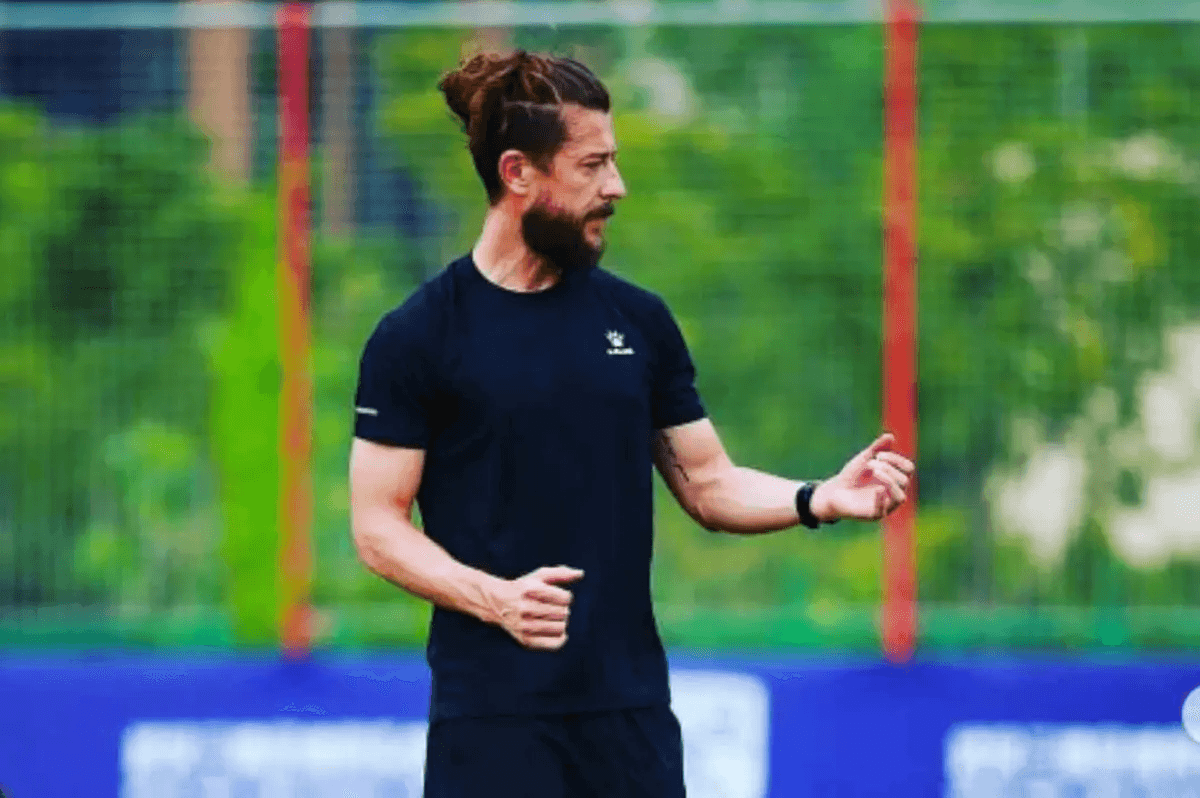
In the 2026 Women’s Africa Cup of Nations final in Morocco, Frenchman Dimitri Loubet witnessed a historic achievement for the Cameroon women’s national team, which won the continental title for the first time in its history after eliminating host Morocco in the semi-finals.
While celebrating the achievement with the Cameroonian players, Loubet was recalling the phone call he received from Samuel Eto’o, President of the Cameroon Football Federation, which opened a new chapter in his coaching career after his departure from Al Ahly.
Loubet left the Al Ahly women’s team at the end of last season, after two years spent at the Red Fortress, during which he successfully led the team to its first title in history by winning the Egyptian Cup, in addition to finishing second in the Egyptian League for two consecutive seasons.
After leaving Al Ahly, the French coach began a new challenge after Samuel Eto’o, President of the Cameroon Football Federation, contacted him to take on a role within the technical staff of the Cameroon women’s national team. Loubet agreed to undertake the experience and took on the role of technical coordinator and coach within the staff.
In a special interview with Kooora, the French coach spoke about the behind-the-scenes of the historic title, revealed for the first time the reasons for his departure from Al Ahly, and also spoke about the most prominent Egyptian players he believes can go on to play professionally in Europe.
How do you describe your feelings after winning the Women’s Africa Cup of Nations with Cameroon?
I am extremely proud of what we achieved and the work we did. Throughout my professional career, and in every place I have worked as a coach, I have achieved victory because I have never cheated or deceived anyone.
I give my best every day, because my career is the result of my journey and personal effort. I do not have a famous name, and my father did not look for jobs for me or open doors for me; only the results speak for me.
What was the hardest moment Cameroon faced during the tournament? And when did you first feel that the team was truly capable of winning the title?
The hardest moment was undoubtedly the penalty awarded in the 119th minute of the semi-final against Morocco. It was a very lenient decision regarding a touch that was completely unintentional, and for a moment I was afraid that this decision might steal our dream from us.
But our goalkeeper became the guardian angel of this dream.
As for the moment I first felt that we were capable of winning the title, honestly, no one believed in us. We were not even among the favorites to win the tournament, like Egypt.
But after several training sessions, I already knew that if I succeeded in leading these players to where I wanted to take them, we could achieve great things.
These players are very young and inexperienced, but they have an exceptional mentality. All we had to do was work tactically.
We made an exceptional journey because we worked frantically, with more effort than anyone else, day and night. The cooperation within the technical staff made the difference.
I have previously worked with strong technical staffs, but reaching this level of excellence in just two months was exceptional. Finding the best players, selecting them, and training them was like an impossible mission.
Can you take us back to what happened behind the scenes in the dressing room before the final and after the final whistle?
Before the final, the atmosphere was exactly like the preparation for any other match, with the same professionalism and attention to the finest details that we always strive for.
As for after the final whistle, the atmosphere was crazy in every sense of the word. It is the first title in Cameroon’s history, and the atmosphere within this group is exceptional and pure, simply put.
What is your specific role as coordinator for the Cameroon women’s national team, and to what extent do you participate in technical decisions?
My role is to lead this national team in all aspects. All responsibilities and all technical decisions regarding the national team are my responsibility.
Why did you decide to join Cameroon?
Samuel Eto’o, when the President of the Federation personally calls you and tells you that he wants you to lead this project, it is a childhood dream, and you can only say yes.
As for winning the title so quickly, honestly, no one expected it, not even we ourselves at first.
Before joining Cameroon, you were the head coach of the Al Ahly women’s team. How do you evaluate your experience in Egypt?
It is a source of pride for me that I worked at the biggest club in Africa, established its women’s football sector, and most importantly, I succeeded in giving the team its first title in history.
I worked without stopping, every day of the days God granted me, despite the continuous attempts by some people to bring us down.
You won the Egyptian Cup with Al Ahly... What is the most prominent moment that remains in your memory from your time at the club?
Winning the Egyptian Cup was the culmination of everything we provided; it was unexpected and an exceptional achievement by all standards.
Also, finishing the league in second place for two consecutive seasons was exceptional considering the resources available to us, and when I talk about resources, I mean the players available to us.
We did the impossible.
Why did your journey with Al Ahly end? Did you want to continue with the team?
I did not want to continue. The work mentality of some players was far from my mentality, and there are things that are difficult to accept.
When you arrive in a new country, you cannot change everything; you have to adapt to the culture.
Al Ahly will return to winning in the future, that is certain, as it is the biggest club in Africa. The problem lies in choosing the right people, and on this point, I have some doubts.
Captain Shady, the head of the women’s football sector at Al Ahly, and I were the only ones who worked in this direction, always for the club and only for the club.
He was the one who gave me the opportunity to reach Al Ahly, and he was also the one who helped me continue during two very difficult years, which were exhausting for me and my family.
He was an exceptional player, a historic figure, and an exceptional president. He is a friend to me, and I have immense respect for him. He is a great man, and Al Ahly is lucky to have him.
And among the good people in this club, I also want to mention my wonderful assistant, Hakima Bousita, who will succeed at the highest levels in the future.
Among the Egyptian players you coached at Al Ahly, who do you believe have the ability to play professionally in Europe?
Very few players in Egypt currently possess the level that qualifies them to play in Europe.
Noura Khalid has the greatest potential and is, in my opinion, the best talent in Egypt at the moment. I believe she should leave Egypt as soon as possible to reach her full potential.
Nour Youssef is an exceptional player and will succeed in Europe very soon, and Nadin Ghazi is recovering from a very difficult period, and if she continues to develop, she will get there too.
As for Lolo Nasr, she still has some things to learn, but I know that with hard work, she will get there quickly.
I never forget my players, and they know that if they need me at any time, I will always be there for them.
After your experience in both Egypt and Cameroon, what do you think Egyptian women’s football needs in order to compete for the Women’s Africa Cup of Nations title?
The first problem is a mentality problem. I have a very direct and demanding vision for work; nothing should come before merit, work, and effort. Some people find it difficult to accept that.
The second problem is organization. The league is in a complex situation, and the Federation is not making the effort that Egyptian talents deserve.